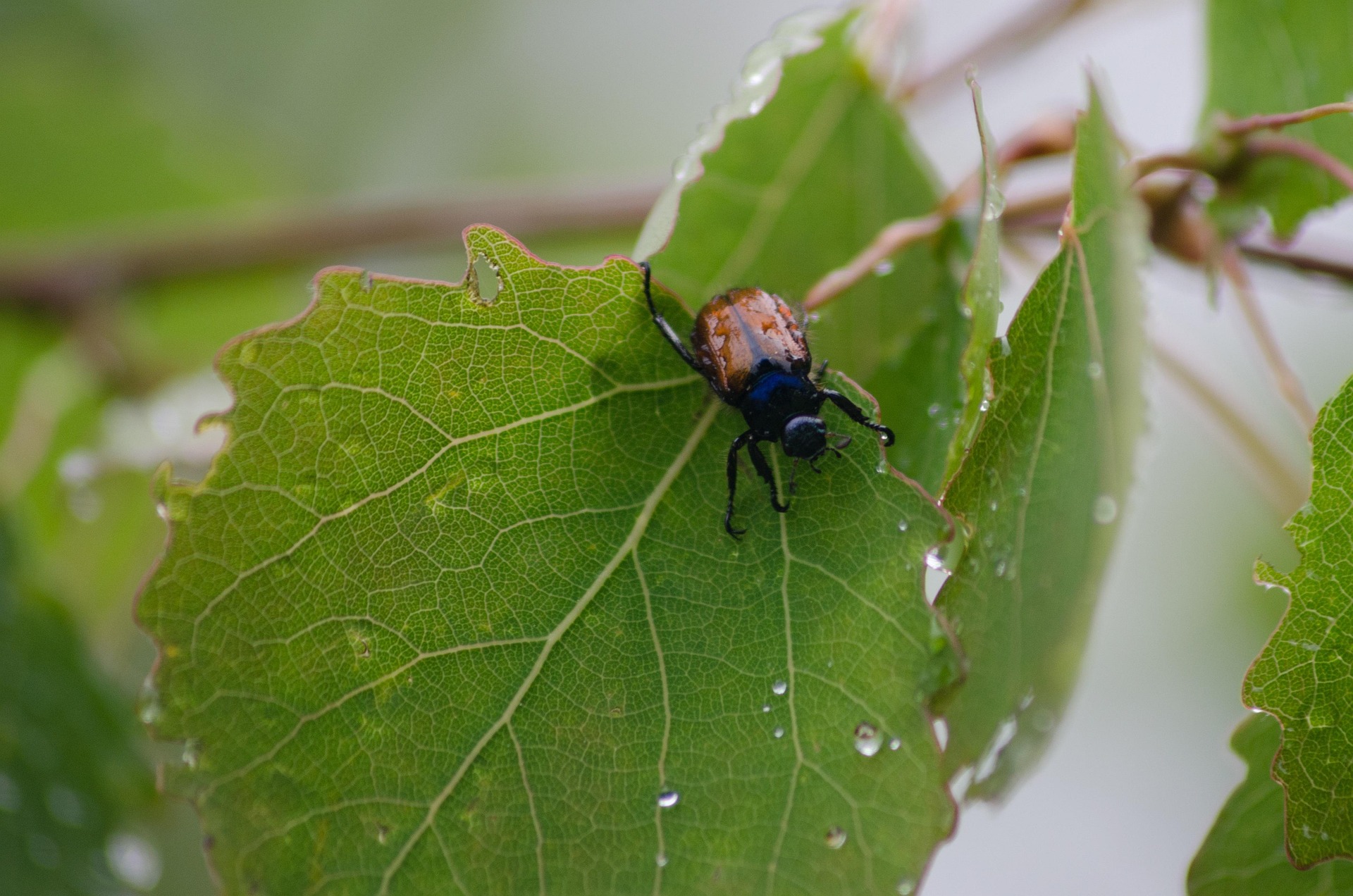
Japanese beetles are an invasive insect species originally from Japan, now widespread in parts of North America and Europe.
What They Are
- Origin: Japan (where they have natural predators and are not a major pest)
- Introduced to U.S.: First found in New Jersey in 1916
- Appearance:
- Adults: Metallic green body, bronze wing covers, and six white tufts of hair along each side of the abdomen
- Size: About ½ inch (12 mm) long
- Larvae (grubs): White C-shaped grubs found in soil
What They Do
- Feeding habits:
- Adults eat leaves, flowers, and fruit from over 300 plant species, including roses, grapes, linden trees, and beans.
- They skeletonize leaves — only the leaf veins are left.
- Grubs feed on grassroots, damaging lawns, golf courses, and pastures.
Japanese Beetles favorite plants
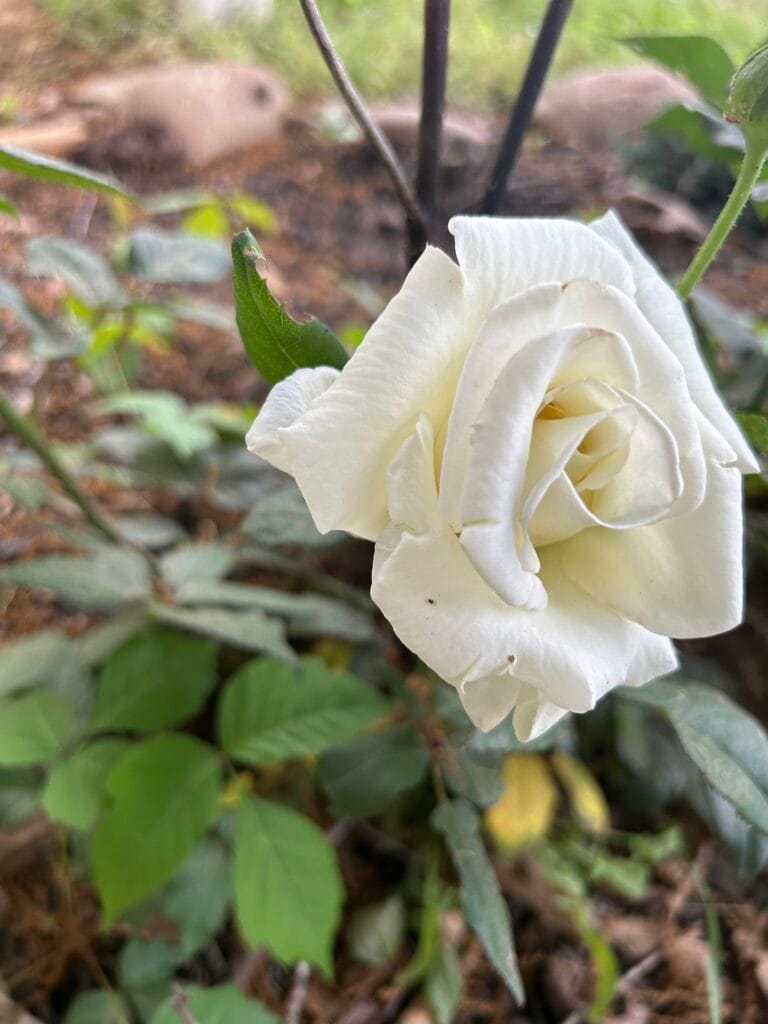
Highly Preferred
These are often severely skeletonized or defoliated:
- Roses
- Grapes / grapevines
- Linden trees (also called basswood)
- Japanese maple
- Hibiscus
- Crabapple trees
- Cherry, plum, and apricot trees (stone fruits)
- Beans (especially pole beans)
- Zinnias
- Birch trees
- Apple trees
- Grapes
Frequently Targeted
May be damaged but usually not as severely:
- Corn (silks)
- Crape myrtle
- Raspberries and blackberries
- Sunflowers
- Elm trees
- Peach trees
- Snapdragons
- Virginia creeper (vine)
Plants They Tend to Avoid
These are good options for landscaping if you’re in an area with heavy Japanese beetle activity:
- Boxwood
- Forsythia
- Lilac
- Magnolia
- Dogwood
- Holly
- Juniper
- Spruce
- Yew
- Ash trees (though threatened by other pests)
Why They’re a Problem
- They have few natural enemies outside Japan.
- Cause significant agricultural and ornamental plant damage.
- Spread rapidly due to:
- High reproduction rate
- Broad diet
- Larvae surviving in soil
Control Methods
Cultural Controls
- Plant less attractive species (e.g., boxwood, holly, lilac instead of roses or grapes)
- Remove infected plants or prune heavily infested branches
- Keep your lawn healthy and aerated to reduce grub infestation
Physical Controls
- Hand-pick beetles early in the morning and drop them in soapy water
- Use row covers to protect vegetable gardens
- Use traps carefully — place them far from plants you want to protect, or they may attract more beetles
Chemical Controls
- FOR ADULT BEETLES (on plants)
- These work best when beetles are actively feeding (usually June–August):
- 1. Neem Oil (Organic)
- Best for: Light infestations, organic gardens
- How it works: Disrupts feeding and reproduction
- Safe for: Most beneficial insects if used late in the day
- Popular brands: Bonide Neem Oil, Safer Brand Neem Oil
- 2. Pyrethrin-Based Sprays
- Best for: Quick knockdown of beetles
- How it works: Natural extract that kills on contact
- Safe for: Use in evenings to avoid harming bees
- Popular brands: Bonide Japanese Beetle Killer, Garden Safe Insect Killer
- 3. Carbaryl (Sevin)
- Best for: Widespread infestations
- How it works: Kills on contact and offers short-term residual protection
- Warning: Toxic to bees — apply early morning or late evening
- Brands: Sevin Insect Killer
- 4. Acetamiprid (Systemic Option)
- Best for: Long-term protection (enters plant tissue)
- How it works: Beetles die after feeding
- Warning: Harmful to pollinators if sprayed on flowers
- Brands: Ortho Flower, Fruit & Vegetable Insect Killer
- FOR GRUBS (in soil, spring or fall)
- Treat grubs in late summer or early fall (August–October), or early spring before beetles emerge:
- 1. Imidacloprid (Systemic Grub Killer)
- Best for: Preventing next year’s beetle population
- How it works: Absorbed by grass roots, kills grubs
- Apply: Early to mid-summer for best results
- Brands: Bayer Season-Long Grub Control, Scotts GrubEx
- 2. Chlorantraniliprole (Safe for Bees)
- Best for: Environmentally safer grub control
- How it works: Long-lasting and low toxicity to pollinators
- Apply: Early summer
- Brand: Scotts GrubEx (check label for active ingredient)
Biological Controls
- Milky spore (a bacteria that kills grubs) – takes 1–2 years but builds up in soil
- Beneficial nematodes (e.g., Heterorhabditis bacteriophora) – good for targeting grubs
- Encourage natural predators like birds or parasitic wasps
Do Beetles traps work
Yes — Japanese beetle traps do work, but they often do more harm than good if not used carefully. Here’s why:
How Japanese Beetle Traps Work
- Traps use a dual lure: a floral scent and a sex pheromone.
- They attract male and female beetles from a wide area.
- Once close, beetles fall into a bag or container and can’t escape.
The Problem: They Attract More Than They Catch
- Studies show that traps attract far more beetles than they capture.
- This can increase beetle activity in your yard, leading to more plant damage, especially if the trap is placed too close to susceptible plants.
When & How to Use Traps Effectively
If you want to use traps, here’s how to minimize problems:
DO:
- Place traps far away (at least 30–50 feet) from valuable plants, ideally at the edges of your property.
- Use traps strategically with neighbors — trapping works better when coordinated across a larger area.
- Empty the bags frequently, as full traps lose effectiveness and smell worse.
DON’T:
- Place traps next to or in your garden — this will draw beetles to the plants you want to protect.
- Rely solely on traps — use them with insecticides or organic controls for real results.
Final words
Traps can work, but they’re risky to use alone and must be placed far from plants. For most homeowners, a combination of neem oil or insecticide, handpicking, and grub control is more effective. Traps for the most part do more harm than good. Every year I have a huge infestation of these beetles and they love my concord, reliance, and neptune grapes. Roses are and green beans are another favorite target. I usually try to hold off on spraying neem or insecticide as long as I can, for a reason you may not be thinking of. Japanese beetles are really liked by my chickens. I will either hand pick these beetles in the morning or evening, they tend to be much slower when the temps are a little lower. I will put the beetles in a bucket of water with a lid. The water is really important since when I put the bucket in with the chickens that water slows the beetle down enough so the chickens and pick them off. Chickens love these beetles more than anything, and it is a good clean natural protein for the chickens, win win for everyone except the beetles.
Comments are closed