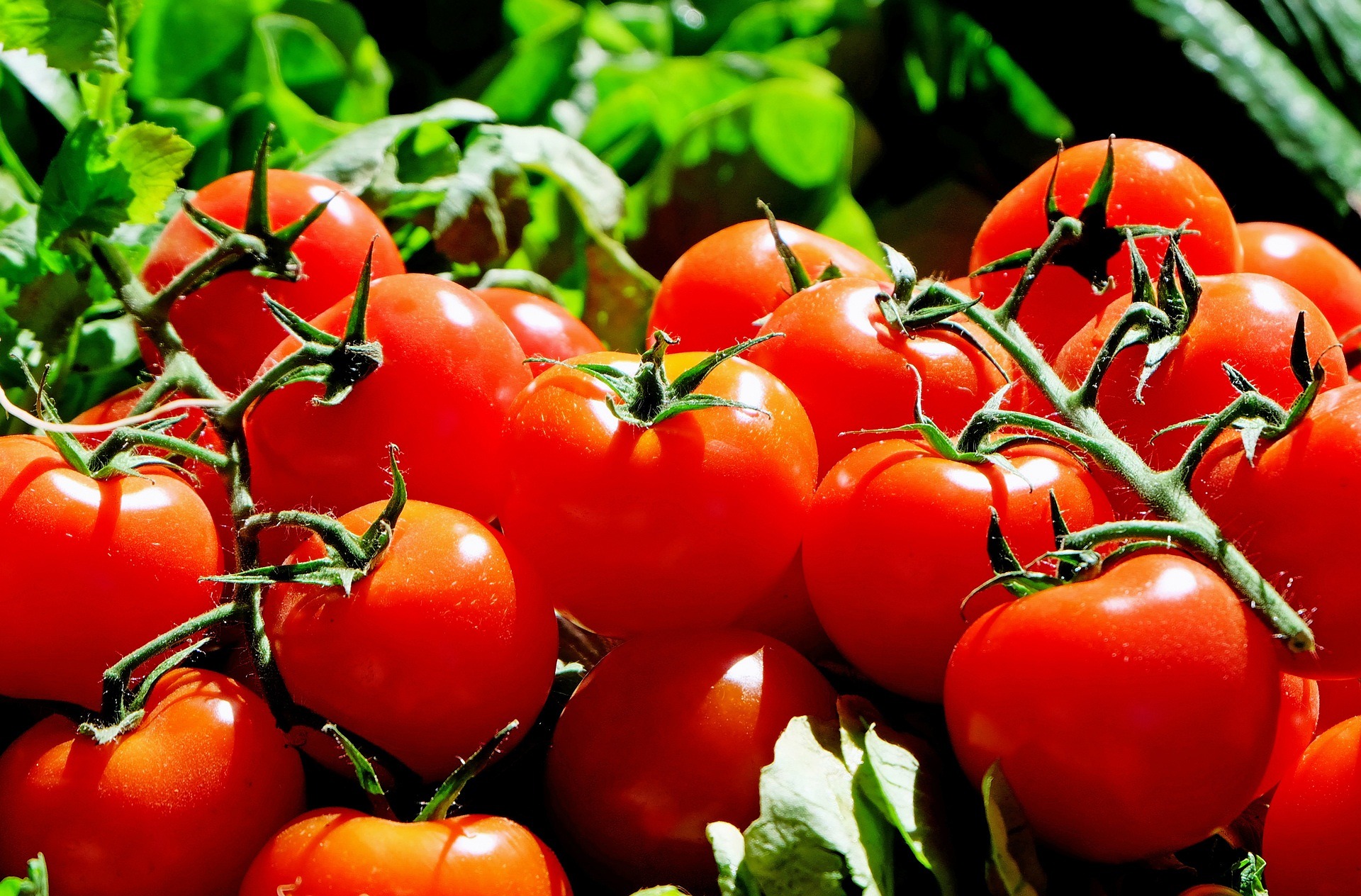
Starting your own seeds offers several advantages over buying garden-ready plants. It’s usually far more cost-effective, allowing you to grow many more plants for the same price as a few nursery starts. You also get access to a much wider variety of cultivars, including unique or heirloom types that garden centers don’t always carry. Starting seeds gives you full control over timing and growing conditions, ensuring healthier transplants that are adapted to your garden from the beginning. Plus, it’s a rewarding, hands-on process that deepens your connection to the growing season and gives you a head start on the garden well before spring arrives. If you have a larger garden as I do, it would cost thousands to buy all the plants each year. Most importantly I look forward to every year of picking out all my seeds each year from either some very good online seed catalog or big box stores.
When to start seeds
General dates
Average first and last frost dates for USDA Hardiness Zones 4 through 10 (Note: these are approximate — your local frost dates may vary.)
| Zone | Average Last Spring Frost | Average First Fall Frost |
|---|---|---|
| Zone 4 | April 24 – May 12 | September 21 – October 7 |
| Zone 5 | April 7 – April 30 | October 13 – October 21 |
| Zone 6 | April 1 – April 21 | October 17 – October 31 |
| Zone 7 | March 22 – April 3 | October 29 – November 15 |
| Zone 8 | March 13 – March 28 | November 7 – November 28 |
| Zone 9 | February 6 – February 28 | November 25 – December 13 |
| Zone 10 | No usual frost / freeze | No usual frost |
Seed Starting Chart
| Vegetable | Start Indoors | Transplant Outdoors | Direct Sow Outdoors |
|---|---|---|---|
| Tomatoes | 6–8 weeks before last frost (late Jan–mid Feb) | 1 week after last frost | — |
| Peppers (sweet & hot) | 8–10 weeks before last frost (early–mid Jan) | 1–2 weeks after last frost | — |
| Eggplant | 8–10 weeks before last frost | 1–2 weeks after last frost | — |
| Broccoli | 6–8 weeks before last frost (mid Jan–early Feb) | 2 weeks before last frost | Late winter |
| Cabbage | 6–8 weeks before last frost | 2–3 weeks before last frost | Late winter |
| Cauliflower | 6–8 weeks before last frost | Around last frost | Early spring |
| Lettuce | 4–6 weeks before last frost | At or just before last frost | Late winter–early spring |
| Kale | 4–6 weeks before last frost | 2–3 weeks before last frost | Late winter |
| Spinach | — | — | Late winter |
| Onions (from seed) | 10–12 weeks before last frost (early Jan) | As soon as soil is workable | — |
| Leeks | 10–12 weeks before last frost | 2 weeks before last frost | — |
| Cucumbers | 3–4 weeks before last frost (late Feb) | 1 week after last frost | After last frost |
| Summer/Winter Squash | 3–4 weeks before last frost | 1 week after last frost | After last frost |
| Melons | 3–4 weeks before last frost | 1–2 weeks after last frost | After last frost |
| Pumpkins | 3–4 weeks before last frost | 1 week after last frost | After last frost |
| Beans | — | — | 1–2 weeks after last frost |
| Peas | — | — | Late winter (soil ~40°F+) |
| Corn | — | — | 1–2 weeks after last frost |
| Beets | — | — | Late winter–early spring |
| Carrots | — | — | Late winter–early spring |
How to start seeds
The best starting medium for seeds is one that is light, sterile, moisture-retentive, and well-draining. Most gardeners get the best results using a seed-starting mix, not regular potting soil. I generally just buy the premade seed starting mix at your local big box store. It is fairly cheap and although the bag is small it goes a long ways. I have also use potting mix and I have had basically the same results.
What Makes a Great Seed‑Starting Tray
- Tray Size / Format
- A common standard tray size is the “1020” tray (~10″ × 20″). (Planting Trays)
- Cell flats (or plug trays) come in many densities (e.g., 50-cell, 72-cell, 200-cell) to suit different seed types and how long seedlings stay in the tray. (Johnny’s Selected Seeds)
- Cell Size / Depth
- Smaller-seeded plants or ones transplanted early: higher-cell trays (like 128-cell or 200-cell). (Planting Trays)
- Larger plants (cucumbers, tomatoes, squash) do better in fewer, deeper cells (like 32‑cell trays). (Planting Trays)
- Material
- Drainage / Watering Design
- Trays should have good drainage or a system to wick water up (bottom watering).
- Some systems include self-watering mats or reservoirs for consistent moisture. (Popular Science)
- Humidity Control
- A clear dome helps with germination by keeping humidity in.
- For more control, some trays have individual domes per cell or smaller group. (Bob Vila)
- Reusability & Durability
- Thicker, food-safe plastics make for long-term use. (Better Homes & Gardens)
- Reinforced trays (e.g., “extra‑strength” 1020) are favored for repeated use. (Bob Vila)
Top Seed-Starting Tray Recommendations
- Jiffy 72‑Cell Hex Tray: Durable plastic with hexagon cells. Good root development.
- Burpee SuperSeed 36‑Cell Silicone Tray: Flexible silicone lets you pop seedlings out without damaging roots.
- Burpee SuperSeed 16 XL‑Cell Tray: Big cells, great for larger-seeded veggies or plants that need more root space.
- Bootstrap Farmer 1020 Flat Tray: Extra-strong, reusable 10×20 tray that’s a great standard base.
- Epic 6‑Cell Propagation Tray: Compact, great for a few larger-start seedlings or limited space.
- Vego Stackable 1020 Tray: Stackable design saves space; includes air-pruning strips for better root health.
- 25‑Cell Seed Starting Tray: A good middle-ground tray size if 72 is too many and 6 is too few.
- 10‑Pack Seed Starter Tray Kit w/ Dome: A budget option that comes with multiple trays, base, and a humidity dome.
My Recommendations (Based on Different Scenarios)
- If you’re starting lots of small seedlings for a veggie garden → Use a 72-cell or 128-cell cell flats inside a 1020 reusable tray.
- If you have limited space (windowsill or a small grow area) → Go with smaller cell trays like the Epic 6‑cell.
- If you’re starting larger-seeded vegetables (tomatoes, squash) → Use larger / deep cell trays or XL cell trays.
- If you hate removing seedlings → Use silicone trays so you can gently pop them out.
- If you want long-term, reusable trays → Use extra-strength 1020 trays made from good plastic.
Best Components for a Seed-Starting Mix
- Coco coir or peat moss
Provides a light, fluffy base that holds moisture without getting soggy. - Perlite or vermiculite
Improves drainage and aeration so seeds don’t rot. - Very small particle size
Helps delicate seedlings push through the surface. - Sterile (no pathogens or weed seeds)
Reduces risk of damping-off disease, which commonly kills seedlings.
Top Options
1. Commercial Seed-Starting Mix (Recommended)
- Specifically formulated for germination
- Sterile, consistent texture
- Holds moisture well
Examples: Pro-Mix Seed Starting, Espoma Seed Starter, Jiffy Seed Starting Mix.
2. DIY Seed-Starting Mix
Great if you prefer to mix your own. Try:
- 50% coco coir or peat moss
- 25% perlite
- 25% vermiculite
Optional: A tiny amount of worm castings for nutrients after sprouting (seeds don’t need fertilizer to germinate).
3. Soil Blocks Mix
If you use soil blockers, a special high-fibrous, peat/coco-heavy blend is needed to hold shape.
What Not to Use
- Garden soil – too dense, may contain pests/diseases
- Regular potting mix – heavier particles can slow germination
- Compost alone – too rich and inconsistent for starting seeds
How Often to Water Seed Starts
Before Germination
- Keep the top ¼ inch of the seed-starting mix evenly moist at all times.
- Water lightly every 1–2 days, or whenever the surface starts to look dry.
- Using a humidity dome helps reduce how often you need to water.
After Germination
- Once sprouts appear, remove the humidity dome and water when the top of the soil looks dry, usually every 1–3 days.
- Seedlings dry out faster because they’re under lights and have more airflow.
How to Water Properly
- Use a spray bottle or bottom watering to avoid disturbing seeds.
- If bottom watering, let trays soak for 10–20 minutes, then drain off the leftover water.
- Avoid letting them sit in water—this causes root rot.
Factors That Change How Often You Need to Water
- Grow lights → speed up drying
- Low humidity rooms → more frequent watering
- Small cell trays dry out faster than larger pots
- Heat mats → increase evaporation
- Coco coir mixes → dry out faster than peat-based mixes
Heat
Seedlings grow best within a specific temperature range, and keeping them in the right zone helps prevent problems like slow growth or damping-off.
Ideal Temperature for Seedlings
1. During Germination (Before They Sprout)
Most vegetables prefer warmer soil:
- 70–75°F (21–24°C) for germination
- Warm-season crops like tomatoes, peppers, eggplant prefer 75–85°F (24–29°C)
- Cool-season crops like lettuce, cabbage, broccoli germinate well around 65–75°F (18–24°C)
A heat mat under trays helps keep the soil warm and consistent.
2. After They Sprout (Active Seedling Stage)
Seedlings grow best with slightly cooler air temperatures than germination:
- Indoor air temperature:
65–70°F (18–21°C) during the day
60–65°F (15–18°C) at night
This prevents leggy, stretched-out seedlings.
3. Hardening Off (Before Planting Outside)
Gradually expose seedlings to outdoor temps:
- Start when outdoor temps are 50°F (10°C) or warmer
- Bring them in at night if temps drop below 45°F (7°C)
Key Tips
- Heat mats should be turned off once seeds sprout—too much warmth afterward causes legginess.
- Cool-season seedlings (lettuce, kale, broccoli) prefer slightly cooler temps than warm-season seedlings (tomatoes, peppers).
- Avoid drafts, as cold air can stunt growth.
When to Fertilize Seedlings
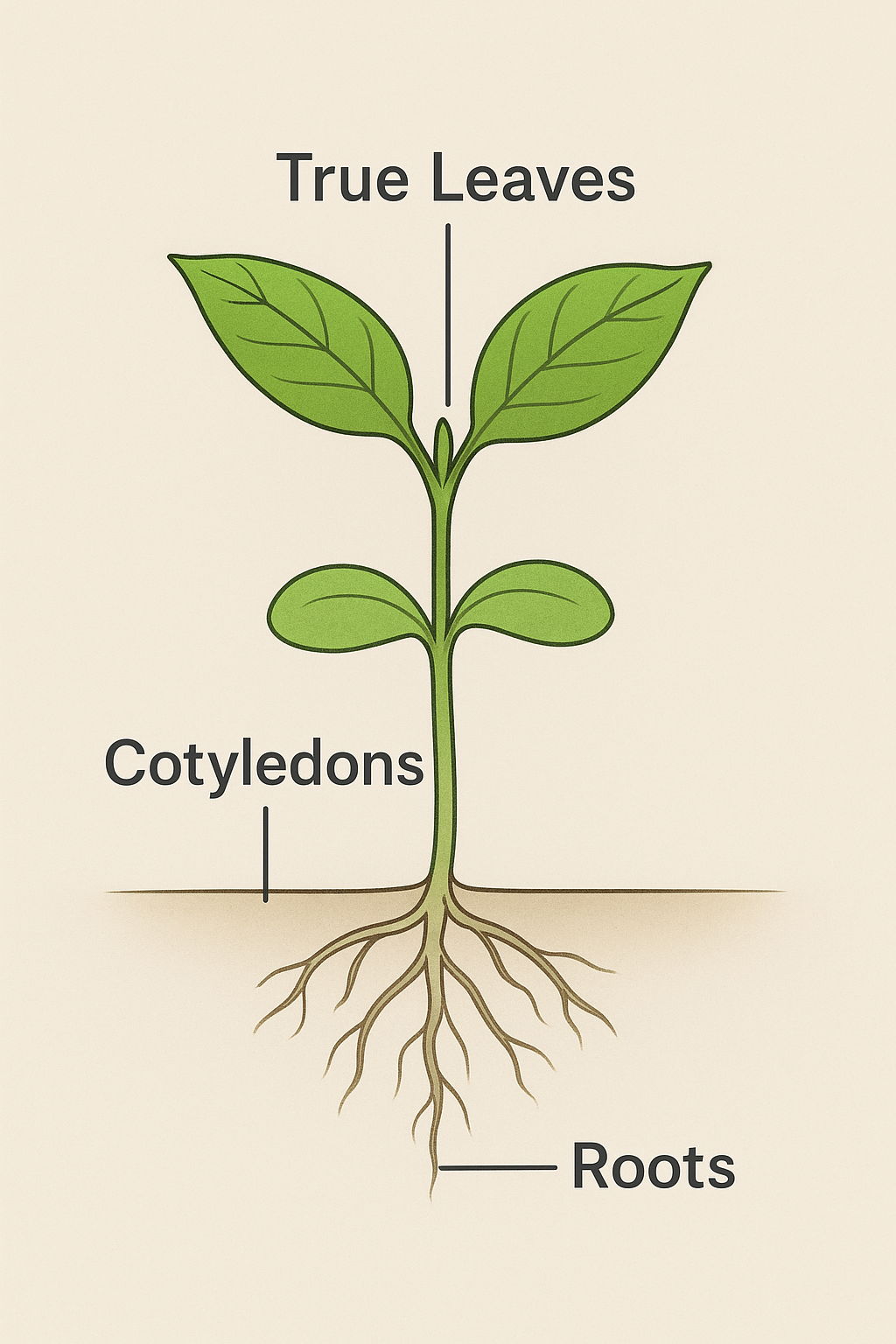
You should start fertilizing seedlings only after they have their first true leaves, not the initial “seed leaves” (cotyledons).
When to Fertilize Seedlings
1. After True Leaves Appear
- This is usually 10–14 days after germination, depending on the plant.
- True leaves look more like the adult plant’s leaves, while cotyledons are smooth and rounded.
2. Use a Diluted Fertilizer
Seedlings are very tender, so start gently:
- Use ¼-strength of your regular liquid fertilizer.
- Fertilize every 1–2 weeks.
Good options:
- A balanced liquid fertilizer (e.g., 10-10-10 or 5-5-5)
- Fish emulsion (diluted)
- Seaweed or kelp fertilizer
- Organic seedling fertilizer blends
3. Signs They Need Feeding
- Light green or pale leaves
- Slow growth
- Bottom leaves yellowing (after true leaves form)
4. Don’t Fertilize Too Early
Before true leaves form, seedlings rely entirely on stored energy inside the seed—fertilizer can burn them or encourage damping-off.
5. Stop Fertilizing Just Before Transplanting
About one week before transplanting, switch to plain water as you begin the hardening-off process.
When to Up Pot my seedlings
You should up-pot seedlings when they’ve outgrown their current cells but before they become root-bound. Here’s the simplest way to know the right timing:
When to Up-Pot Seedlings
1. When They Have 1–3 Sets of True Leaves
- After the cotyledons and at least one full set of true leaves have developed, the seedlings are strong enough to handle transplanting.
- Most seedlings reach this stage 2–4 weeks after germination, depending on the plant.
2. When Roots Reach the Bottom or Sides of the Cell
Check by gently lifting one seedling out:
- If you see white roots forming a small network, it’s time.
- If the roots are circling or tightly packed, you waited a little too long (still OK—just pot up soon).
3. When the Seedling Looks “Crowded”
Signs include:
- Leaves overlapping neighboring plants
- Soil drying out quickly (a sign of a root-filled cell)
- Slowed growth despite good care
4. Typical Timing by Plant Type
- Tomatoes: 2–3 weeks after sprouting; often need multiple up-pots
- Peppers: 3–4 weeks after sprouting
- Broccoli/Cabbage/Kale: About 2–3 weeks after sprouting
- Herbs: When they have 2–3 sets of true leaves
- Cucumbers/Melons/Squash: Avoid early up-potting—only pot up once, shortly before transplanting
What Size to Up-Pot Into
- From 72-cell → 2″ or 3″ pot
- From 2″ pot → 4″ pot
- Tomatoes can go: cell → 3″ → 4–6″ if starting early
Common Problems
| Problem | Possible Cause(s) | Solution |
|---|---|---|
| Seeds fail to germinate | Old or non-viable seeds; soil too dry or too cold; sown too deep | Use fresh seeds; keep soil consistently moist; check recommended sowing depth; provide bottom heat if needed |
| Damping-off (seedlings collapse at soil line) | Fungal infection from overwatering or poor air circulation; non-sterile soil | Use sterile seed-starting mix; avoid overwatering; improve ventilation; consider a fungicide if persistent |
| Leggy seedlings (tall, thin, weak) | Not enough light; temperatures too warm; overcrowding | Provide 12–16 hrs/day of strong grow light; slightly cooler temps; space seedlings properly; rotate trays |
| Yellowing leaves | Overwatering; nutrient deficiency; poor light | Check watering routine; fertilize lightly after true leaves appear; ensure adequate light |
| Leaves wilting | Underwatering; overwatering; root damage | Water consistently; check drainage; avoid disturbing roots when transplanting |
| Slow germination / growth | Seeds too cold; poor-quality soil; lack of light | Keep soil at recommended temperature; use quality seed-starting mix; provide supplemental light |
| Fungal or mold growth on soil surface | High humidity; poor air circulation; overwatering | Lightly water from the bottom; reduce humidity; improve ventilation; remove surface mold if present |
| Seedlings topple over | Damping-off; weak stems; overwatering | Strengthen stems by gently brushing leaves daily or using a fan; correct watering; sterile soil |
| Roots circling or root-bound | Seedlings left in tray too long | Up-pot seedlings when they have 1–2 sets of true leaves or roots fill the cell |
| Seeds rot before sprouting | Soil too wet; poor drainage; sown too deep | Use well-draining seed-starting mix; water carefully; follow recommended sowing depth |
| Crusty soil surface / hard to water | Soil dries too quickly; compacted soil | Lightly mist soil; cover with humidity dome; use a finer seed-starting mix |
| Leggy seedlings after transplanting | Lack of light after moving; temperature shock | Harden off seedlings gradually; provide bright light immediately after transplant |
Starting seeds at home is both a rewarding and cost-effective way to grow your garden. Not only does it allow you to choose from a wider variety of plants than most garden centers offer, but it also gives you the satisfaction of nurturing life from the very beginning. Watching tiny seeds sprout and develop into healthy seedlings provides a unique sense of accomplishment and connection to nature. Additionally, starting seeds is significantly cheaper than buying mature plants, allowing you to grow more varieties for less money while customizing your garden to your exact preferences. Overall, it combines creativity, patience, and financial savings into an enjoyable gardening experience.
Comments are closed