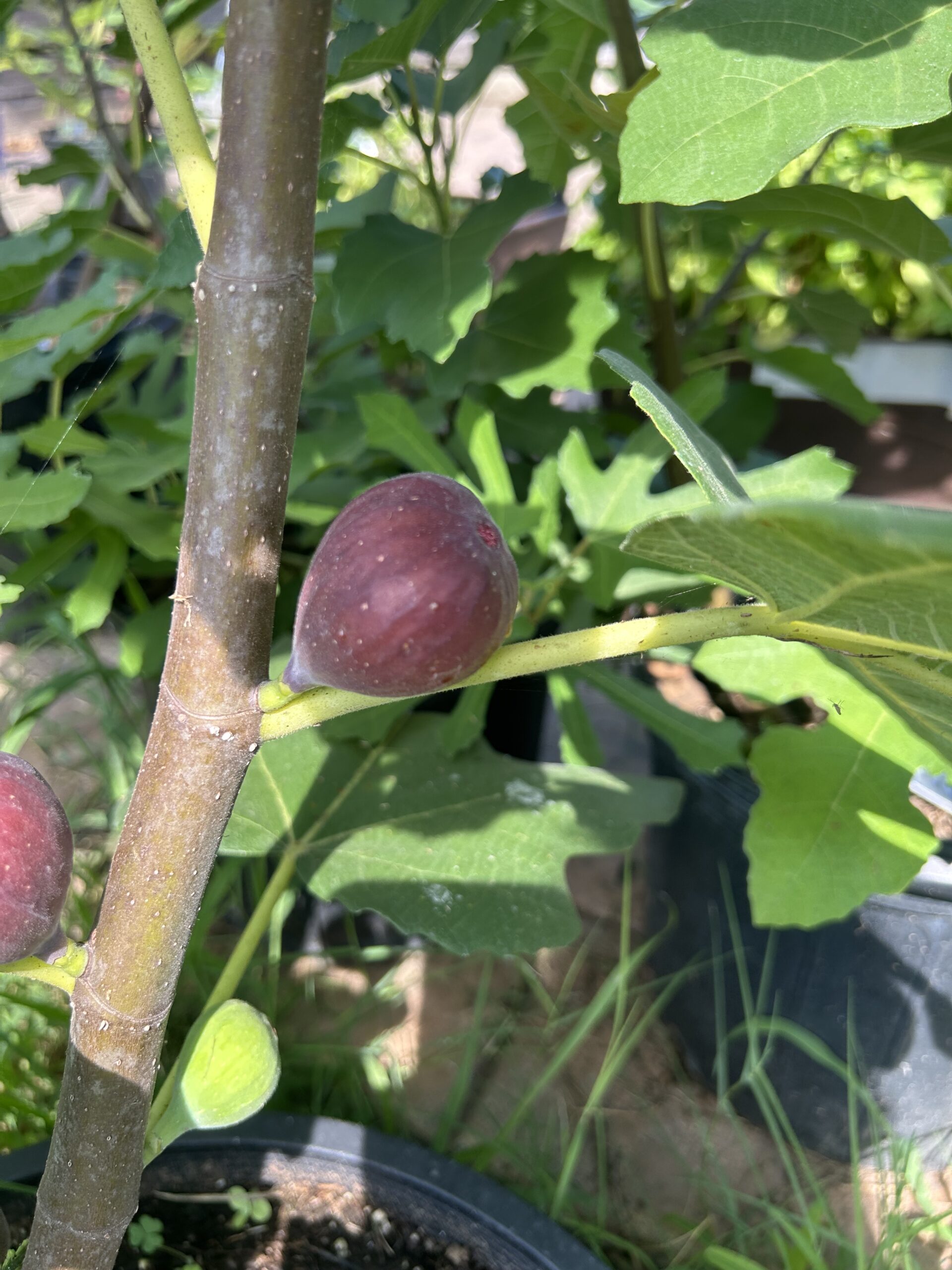
Fig trees are an excellent choice for home gardeners because they’re surprisingly easy to grow, highly productive, and offer delicious fruit with very little fuss. They thrive in warm climates but can also be grown in containers in cooler regions, making them versatile for many backyards and patios. Figs require minimal pruning, are fairly resistant to pests and diseases, and often produce two crops a year under the right conditions. Beyond their practicality, fig trees add beauty to the landscape with their large, tropical-looking leaves. Growing your own figs also guarantees the freshest, sweetest fruit—far better than what you typically find in stores—making the tree both a rewarding and flavorful addition to any home garden.
Fig trees are undeniably beautiful, bringing a lush, almost tropical elegance to any garden. Their large, deeply lobed leaves create a bold, architectural look that stands out among other fruit trees. The foliage has a soft, matte texture that catches light in a gentle, calming way, and the canopy naturally forms a graceful, spreading shape that feels both inviting and ornamental. As the season progresses, the tree becomes even more eye-catching when the figs begin to swell—small green jewels that gradually deepen into rich purples, browns, or ambers depending on the variety. Even in winter, the tree’s sculptural branches add character to the landscape. Altogether, a fig tree isn’t just productive—it’s a living piece of garden art.
4 Main Categories:
1. Common Figs
- The most popular type for home gardeners.
- Do not require pollination to produce fruit.
- Reliable and easy to grow in most climates.
- Examples: Brown Turkey, Celeste, Black Mission, Chicago Hardy.
2. Smyrna Figs
- Require pollination by a special wasp (the fig wasp) to develop fruit.
- Not suitable for most areas outside the wasp’s natural range (mainly parts of California).
- Example: Calimyrna.
3. San Pedro Figs
- Produce two crops:
- Breba crop (first crop) does not need pollination.
- Main crop does require pollination.
- Can be tricky to grow outside areas with fig wasps.
4. Caprifigs
- Not grown for edible fruit—these produce small, inedible figs.
- They exist mainly to host the fig wasp and help pollinate Smyrna and San Pedro figs.
- Important in fig agriculture, not home gardening.
The Common Fig varieties are the best choice because they fruit easily and don’t need specialized pollination.
4 Main Fig Varieties
Fig varieties are often described by their flavor profiles, and they generally fall into a few main taste categories such as sugar figs, berry figs, honey figs, and complex or mixed-berry figs. Sugar figs are known for their rich sweetness and classic fig flavor, making them great for fresh eating or drying. Berry figs have a bright, jammy taste with hints of raspberry or strawberry, offering a deeper, more vibrant flavor. Honey figs are exceptionally sweet and syrupy, with a light golden flesh and a smooth, delicate taste. Some varieties combine these traits, producing a layered flavor that’s both fruity and rich. These categories help gardeners choose a fig tree that matches their preferred sweetness and depth of flavor.
| Fig Type | Flavor Profile | Typical Characteristics | Examples |
|---|---|---|---|
| Sugar Figs | Sweet, classic fig flavor | Rich sweetness, good for fresh eating or drying | Brown Turkey, Kadota |
| Berry Figs | Jammy, fruity, raspberry-like | Deep color, rich and vibrant taste | Black Mission, Chicago Hardy |
| Honey Figs | Light, syrupy sweetness | Golden flesh, smooth delicate flavor | Peter’s Honey, Italian Honey |
| Complex / Mixed-Berry Figs | Layered, fruity + sweet | Combines berry depth with sugar or honey notes | Adriatic, Celeste |
Great Fig Varieties
Chicago Hardy
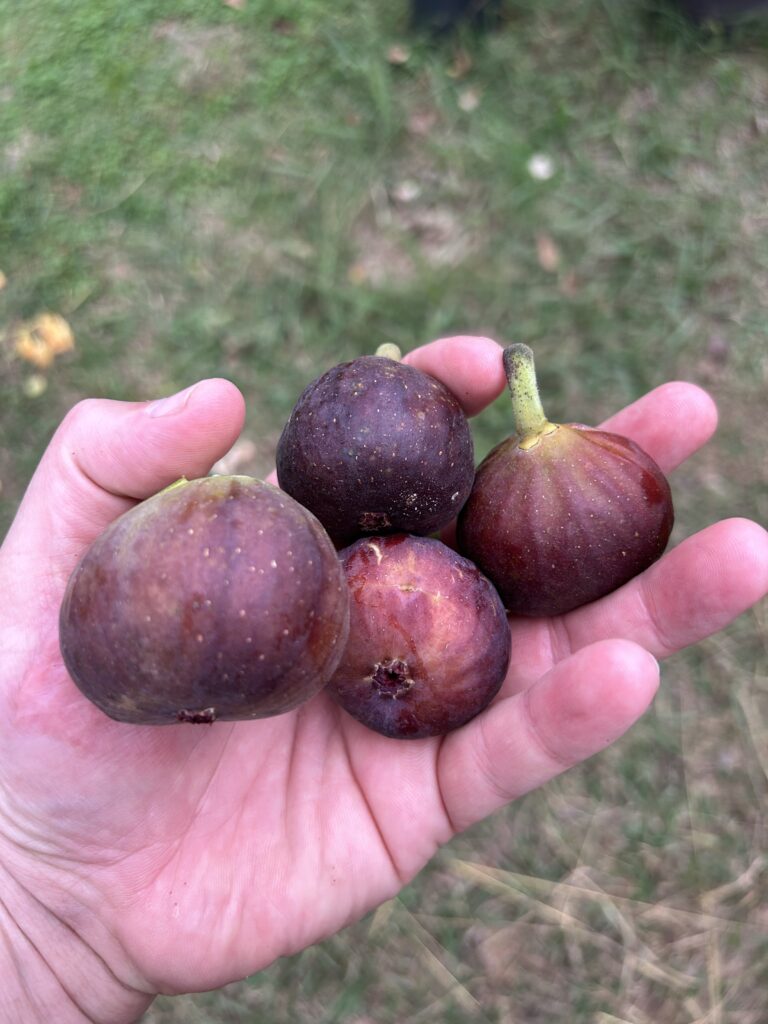
- Widely regarded as the most cold-hardy fig for northern climates.
- Even if heavy winter freezes kill the branches above ground, this tree often regrows from the roots and still produces fruit on new growth.
- Produces sweet, dark-skinned figs with a rich, jammy interior.
Celeste
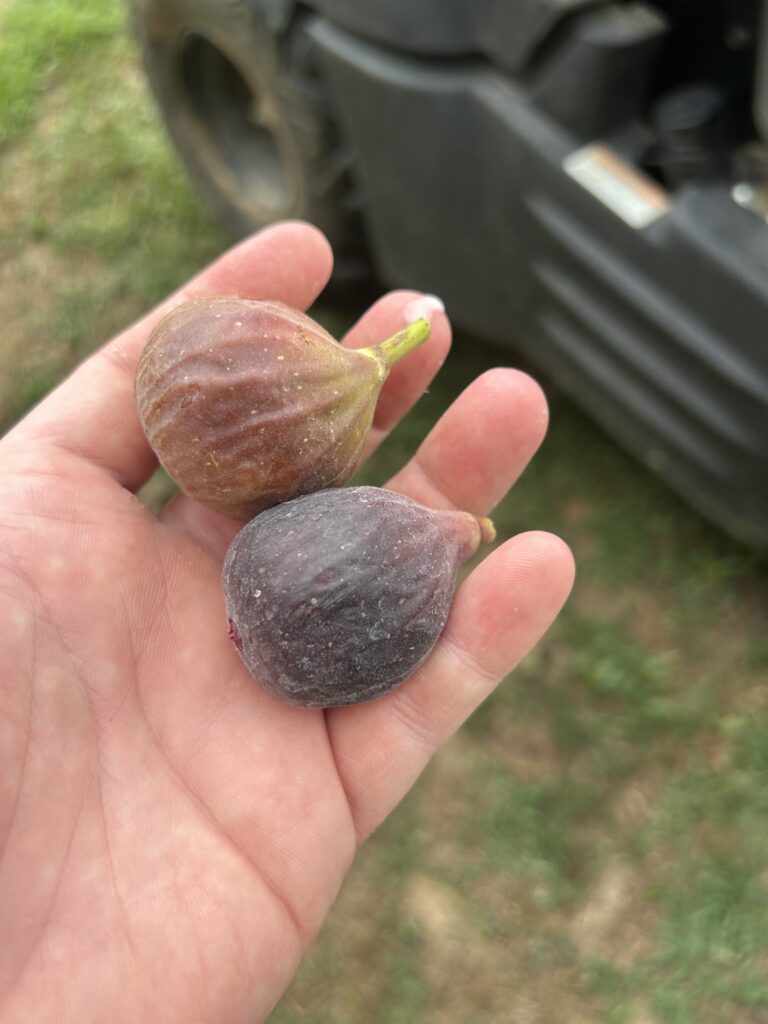
- Cold-hardy and often recommended for Zone 6 gardens — good balance of hardiness and fruit quality.
- Produces smaller, sweet figs that are often described as delicate or “sugar-sweet.”
- Because the tree tends to be more compact than some large fig varieties, it’s also easier to manage and protect over winter.
Brown Turkey
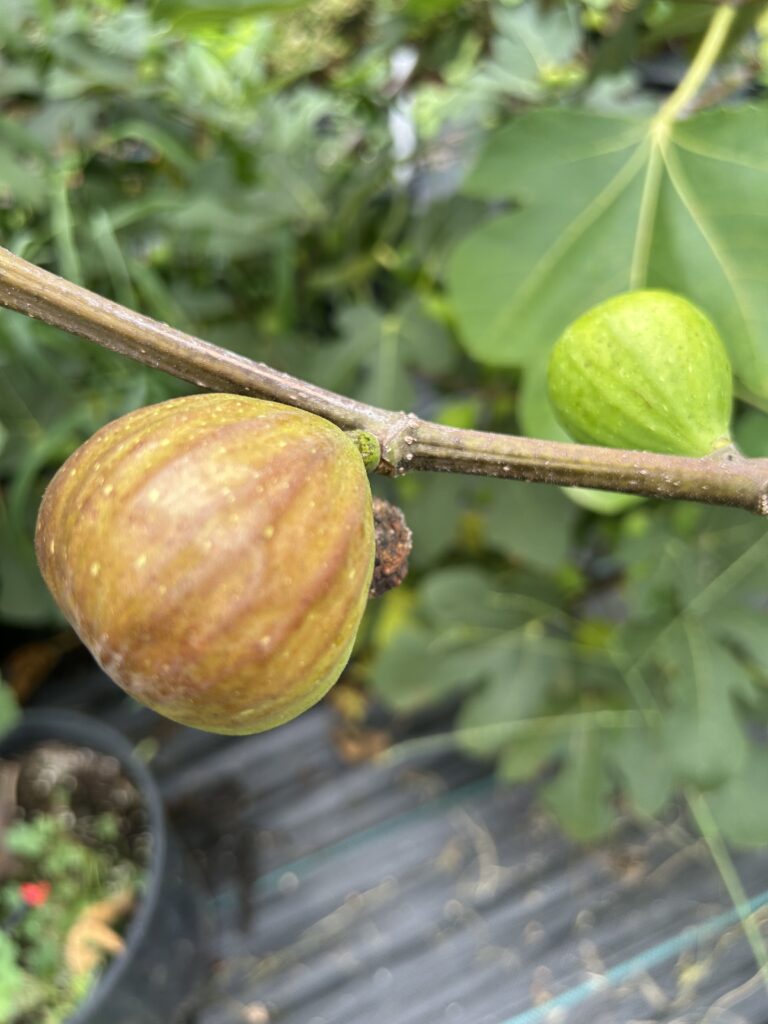
- One of the most widely planted varieties; with proper winter protection, it can do quite well in Zone 6.
- Produces generous yields; figs are mildly sweet and versatile — good for fresh eating, drying, or preserves.
- A solid all-around “classic” fig tree for home gardens.
Desert King
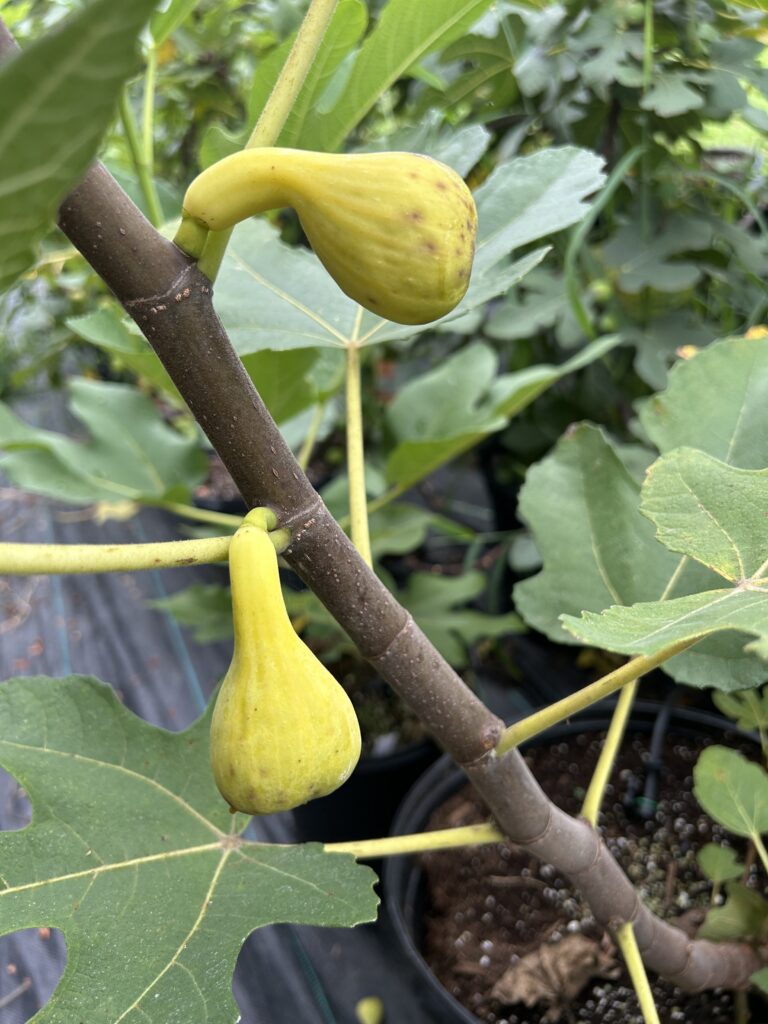
- Suitable for cooler climates including Zone 6 — often recommended for gardens with shorter or cooler summers.
- Produces large figs with greenish skin and pinkish flesh; good for fresh eating or drying.
Violette de Bordeaux
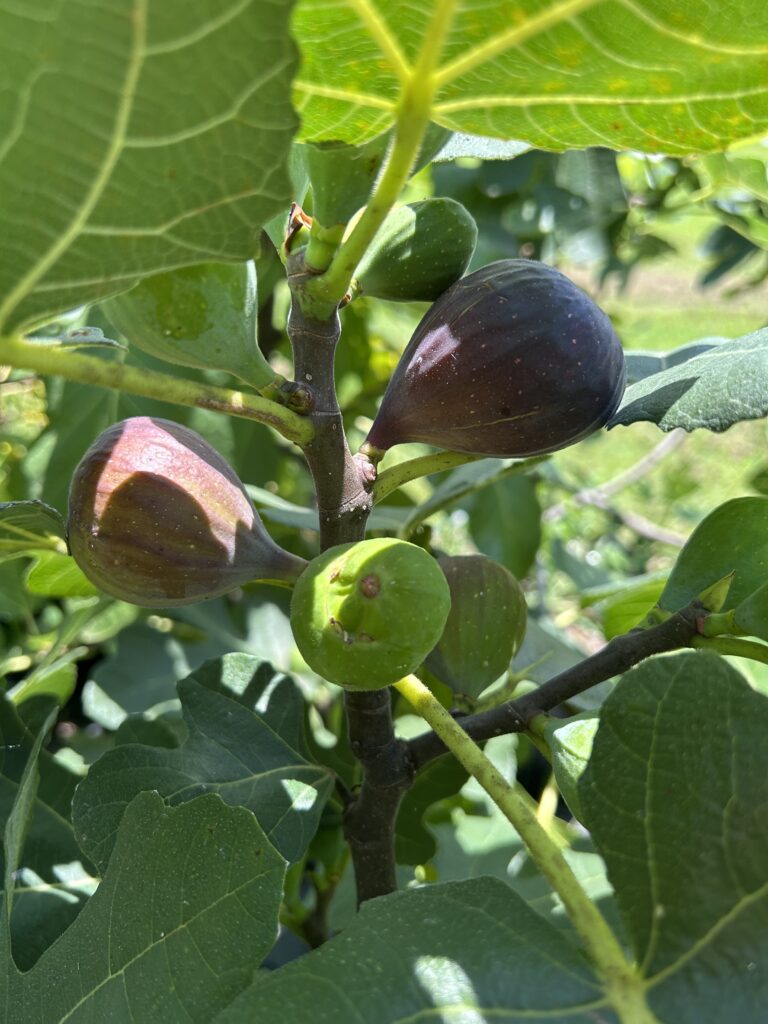
- Known for its sweet, rich, berry-like flavor — a treat if you want deeper, dessert-like figs.
- Often grows more compactly, which can make winter protection easier.
Black Mission
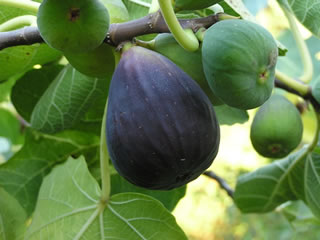
- Well-suited to Zone 7, with a tradition of cultivation in warmer climates.
- Produces richly flavored figs with dark skin and reddish flesh — great fresh, dried or for preserves.
LSU Purple
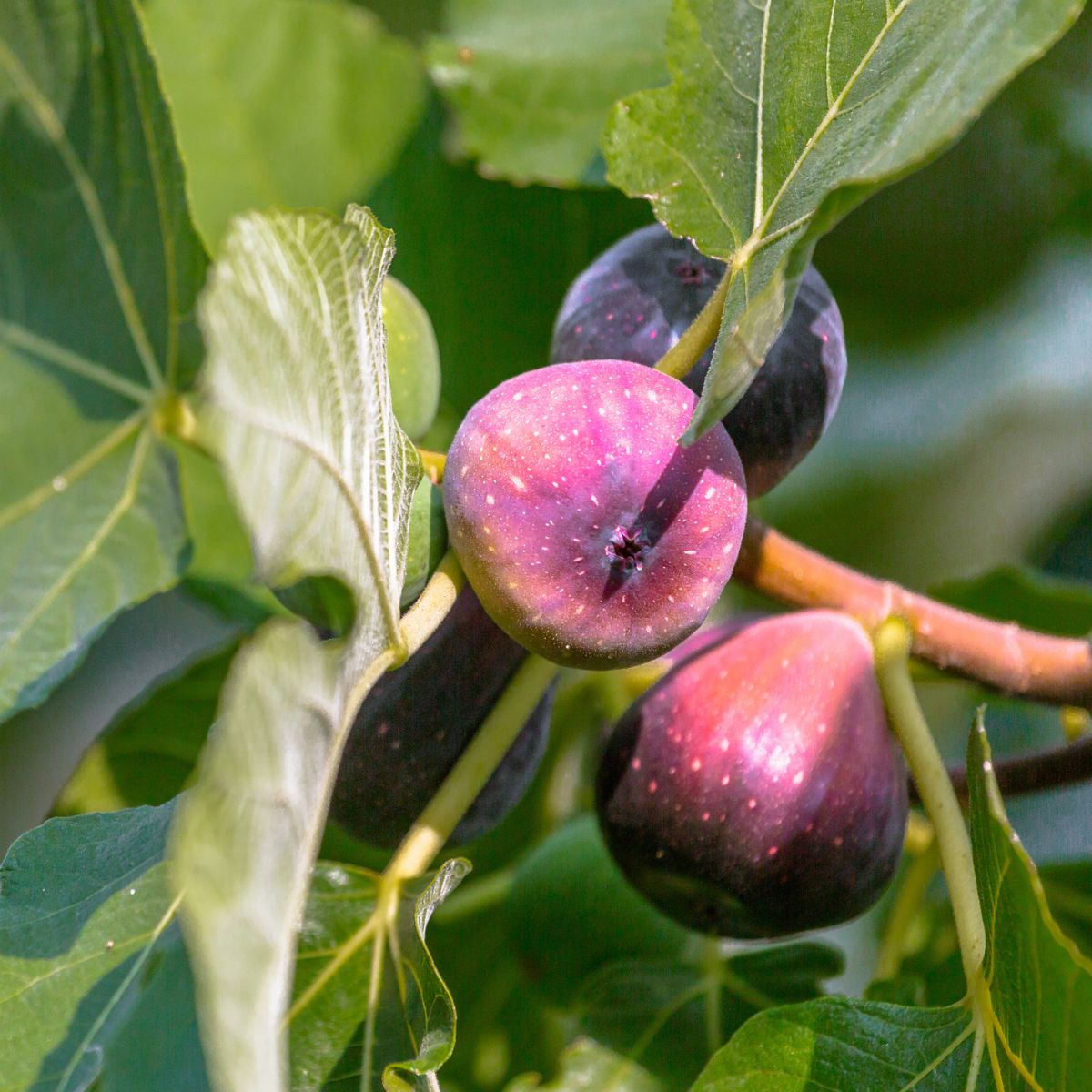
- Developed to handle southern heat and humidity — but still performs well in Zone 7.
- Produces good yields of sweet figs and tends to resist fungal diseases better than many older varieties — helpful if your summers are humid.
What zones for figs trees
Fig trees are more cold-tolerant than many people expect, but their safe growing range depends on the variety and how much winter protection you’re willing to provide.
General Growing Zones for Figs
- Best / Easiest: Zones 7–9
Figs thrive with little to no protection. They grow vigorously and produce reliably. - Possible with Protection: Zones 5–6
Many gardeners grow figs successfully by mulching heavily, wrapping trees, or growing them in containers and overwintering indoors. Hardy varieties (like Chicago Hardy, Celeste, Brown Turkey) do best. - Challenging: Zone 4
Only possible in containers brought indoors for winter, or with very heavy protection and hardy varieties. - Too Hot: Zone 10+
Figs grow well but sometimes struggle with extreme heat, requiring more irrigation and afternoon shade.
Quick Reference
| USDA Zone | Can You Grow Figs? | Notes |
|---|---|---|
| 4 | With indoor/container growing | Needs winter protection indoors |
| 5 | Yes, with winter protection | Choose hardy varieties |
| 6 | Yes | Protection helps in severe winters |
| 7–9 | Ideal | Little to no protection needed |
| 10–11 | Yes | Provide water + afternoon shade in intense heat |
Important Temperatures
Cold tolerance varies by variety, but all fig trees have clear temperature thresholds at which wood or buds are damaged or killed.
Critical Temperature Thresholds for Fig Trees
1. Dormant Wood (Established Trees)
- Damage begins: around 15°F to 20°F (-9°C to -6°C)
Tender varieties show injury at the higher end; hardy varieties tolerate the lower end. - Severe damage: 10°F to 15°F (-12°C to -9°C)
Branch dieback is common; trees often regrow from the base. - Kill temperatures (above-ground wood): 0°F to 5°F (-18°C to -15°C)
Most varieties lose all top growth. - Root survival limit: -5°F to 0°F (-21°C to -18°C)
Roots usually survive if well-mulched.
2. Fruit and Green Growth (Spring/Fall)
- Green tips / new growth killed: 28°F (-2°C)
- Young figs damaged: 26–28°F (-3 to -2°C)
- Hard green figs may survive to: 29–30°F (-1 to -0.5°C)
3. Variety Differences
Some approximate thresholds:
| Fig Type | Wood Damage | Wood Kill |
|---|---|---|
| Hardy types (Chicago Hardy, Celeste, Hardy Chicago strains) | 10–15°F | 0–5°F |
| Moderate types (Brown Turkey, LSU types) | 15–20°F | 5–10°F |
| Tender types (Black Mission, Kadota, Adriatic figs) | 20–25°F | 10–15°F |
Bottom Line
- Below 20°F: expect some damage on most figs.
- Below 10°F: most above-ground wood dies.
- Around 0°F: only the root system survives (if mulched).
- Below -5°F: survival becomes uncertain without extraordinary protection.
Winter Protection Tips
How to Protect Fig Trees in Winter
These methods work from Zone 6 down to Zone 4.
1. Heavy Mulch (Simple + Effective)
Best for young or hardy varieties.
- After the first frost, pile 12–18 inches of mulch around the base:
- shredded leaves
- pine needles
- straw
- wood chips
- This protects the roots, which are the most important part to keep alive.
2. Wrap the Tree (“Fig Burrito” Method)
Great for in-ground figs in Zones 5–6.
Steps:
- Tie branches upward loosely with soft rope or twine.
- Wrap trunk/branches with burlap or frost cloth.
- Surround tree with chicken wire to create a cylinder.
- Fill the cylinder with dry leaves or straw.
- Cover the top with a tarp or plastic (leave side vents for air flow).
This can raise the fig’s survival equivalent by 1–2 zones.
3. Bend and Bury the Tree (Traditional Italian Method)
Most reliable for cold zones.
- Before soil freezes, dig shallow trench on one side of tree.
- Bend the flexible branches down to the ground.
- Peg them down with stakes.
- Cover completely with soil + leaves or straw.
- Uncover in spring.
Protects above-ground wood even into Zone 4.
4. Container Figs (Easiest Protection)
If your fig is in a pot:
- Move into a garage, shed, basement, or unheated barn.
- Ideal winter temp: 20–45°F (-6 to 7°C).
- Water lightly every 4–6 weeks to prevent root dehydration.
5. Wind Protection Matters
Wind kills figs faster than cold.
Add windbreaks (fence, burlap screens, etc.) to reduce stress.
Containers Figs
How to Grow Figs in Containers
1. Choose the Right Fig Variety
Some figs perform much better in pots. Look for compact or cold-hardy types:
- Chicago Hardy
- Celeste
- Brown Turkey
- Petite Negra
- Violette de Bordeaux
These stay manageable and fruit well in limited soil volume.
2. Pick the Right Container
Size
- Start with a 5–7 gallon pot for small trees.
- Move up to 10–15 gallons as the tree grows.
- Large trees can go in 20–25 gallons—the sweet spot for vigorous growth + easy moving.
Material
- Plastic/resin = lighter, easier to move, keeps roots warmer.
- Fabric pots = great drainage, but dry out faster.
- Clay = stable but heavy.
Drainage is critical
Ensure at least 4–6 drainage holes. Figs hate sitting in soggy soil.
3. Soil Mix
Use a light, fast-draining potting mix. A great blend:
- 50% high-quality potting mix
- 25% pine bark fines
- 25% perlite or pumice
You want drainage + aeration, not moisture retention.
Add slow-release fertilizer if the mix doesn’t include any.
4. Planting
- Plant the fig at the same depth it was in its nursery pot.
- Water deeply once after planting.
- Add 2–3 inches of mulch to keep moisture even.
5. Sun Requirements
Figs need 6–8+ hours of direct sun daily for best fruit. South-facing exposure is ideal.
6. Watering
Container figs dry out faster than in-ground trees:
- Water deeply whenever the top 2–3 inches are dry.
- Avoid shallow, frequent watering.
In peak summer, you may water every 1–2 days.
7. Fertilizing
Figs in pots need regular feeding:
- Apply a balanced fertilizer (like 10-10-10 or 8-8-8) monthly from April–July.
- Stop feeding in late summer so new growth can harden off.
8. Pruning for Container Size
To keep figs compact and productive:
- Prune in late winter before growth starts.
- Remove crossing branches.
- Keep an open vase shape.
- Pinch back long shoots in summer to encourage fruiting spurs.
9. Ripening Fruit
Container figs actually ripen earlier because the roots warm faster.
Keep consistent moisture to prevent fruit drop.
10. Winter Care for Container Figs
Container figs are more vulnerable to cold because roots are exposed.
Temperatures to watch
- Damage begins around 15°F
- Severe damage below 10°F
- Roots in pots can die around 20°F
Winter Protection Options
Option A — Move to a sheltered spot
Place in:
- An unheated garage
- Basement
- Shed
- Enclosed porch
Ideal winter conditions:
- 28–45°F
- Darkness is fine; tree will be dormant.
Option B — Outside protection
If you must leave the pot outdoors:
- Wrap the pot in insulation (blankets, bubble wrap, straw).
- Mulch 12–18 inches around the pot.
- Place against a south-facing wall.
- Wrap the branches in burlap.
11. Spring Wake-Up
Bring the fig back outside after danger of hard frost, usually when nights stay above 25–28°F.
Gradually reintroduce it to sun over 5–7 days.
FIG TREE GROWTH & CARE CALENDAR (CONTAINER-GROWN FIGS)
Late Winter (February–March)
Growth Stage: Dormant → waking up
What to Do:
- Bring container figs out of storage once temps stay above 25°F (-4°C) most nights.
- Prune to shape and remove dead wood.
- Repot if needed (every 2–3 years).
- Begin watering lightly as buds swell.
- Fertilize once with a balanced fertilizer (10-10-10 or 3-1-2).
Spring (April–May)
Growth Stage: Active leafing out
What to Do:
- Move containers outside when nights stay above 35°F (1.6°C).
- Gradually acclimate to sun over 7 days.
- Begin regular watering—soil should stay lightly moist, not soggy.
- Start monthly feeding (liquid fertilizer or slow-release).
Early Summer (June)
Growth Stage: Strong vegetative growth
What to Do:
- Water deeply 2–3× per week (more in heat).
- Continue monthly feeding.
- Pinch branch tips at 5–7 leaves to encourage fruiting.
- Watch for pests (fig beetle, scale, mites).
Mid–Late Summer (July–August)
Growth Stage: Fruit swelling & ripening
What to Do:
- Water consistently—uneven watering = fruit drop.
- Stop nitrogen-heavy fertilizers after July 1.
- Provide afternoon shade in 100°F+ heat.
- Harvest figs as they droop and soften.
Fall (September–October)
Growth Stage: Slowing down
What to Do:
- Reduce watering frequency.
- Stop all fertilizing by early September.
- Allow plant to harden off for winter.
- Pick any fruit that won’t ripen.
Late Fall (November)
Growth Stage: Dormancy begins
What to Do:
- Move container figs into winter storage when nights drop below 25°F (-4°C).
- Ideal storage: Garage, basement, shed staying between 20–45°F.
- Water lightly once per month (just enough to keep soil from turning to dust).
Winter (December–January)
Growth Stage: Fully dormant
What to Do:
- Keep in a cool, dark environment.
- Water monthly (¼ cup to 1 cup depending on pot size).
- No fertilizer, no pruning needed.
EXTRA TIPS FOR CONTAINER FIG SUCCESS
Best container sizes
- Year 1: 3–5 gallons
- Year 2–3: 7–10 gallons
- Mature: 15–20 gallons (sweet spot)
- Larger than 25 gallons = harder to move, little extra benefit.
Best soil mix
- 50% pine bark fines
- 30% peat or coco coir
- 20% perlite
(Drains quickly—figs HATE wet roots.)
How cold kills figs
- Wood damage begins at 15°F (-9°C)
- Major dieback at 10°F (-12°C)
- Root death in pots starts around 20°F (-6°C)
So ALWAYS protect container figs in winter.
Fig Tree Container Growing Calendar (Month-by-Month)
January
- Tree is fully dormant.
- Keep in a cold but frost-free place (garage, shed, basement 35–50°F).
- Water lightly once every 3–4 weeks—just enough so soil doesn’t totally dry out.
- Do not fertilize.
- Check for rodents if stored in garages or sheds.
February
- Still dormant.
- Begin checking for swelling buds.
- Minimal watering—do not overwater during dormancy.
- Prepare supplies for spring: potting mix, fertilizer, fresh containers if repotting.
March
- Buds begin to swell.
- Move tree to brighter light but protect from hard freezes.
- Start watering slightly more often.
- Optional: Root prune & repot if needed (every 2–3 years).
Use a high-quality mix: 50% pine bark, 30% peat/coco coir, 20% perlite.
April
- Growth begins.
- Move outdoors gradually (hardening off for 7–10 days).
- Start feeding with a balanced fertilizer (e.g., 10-10-10 or organic equivalent) once every 3–4 weeks.
- Check for pests (fig beetles, aphids, scale).
- Remove any winter-damaged wood.
May
- Active growth.
- Water deeply when top 1–2 inches of soil dry.
- Continue fertilizing monthly OR switch to a slow-release fertilizer.
- Pinch new shoots if you want a bushier shape.
- When temps stay above 50°F at night, figs can stay outdoors full-time.
June
- Rapid growth + breba fruit development (on certain varieties).
- Water 2–3 times per week in warm weather.
- Feed lightly—figs don’t like being over-fertilized.
- Watch for leaf curl from heat stress; provide afternoon shade if temps exceed 95°F+.
July
- Peak fruiting season for many container figs.
- Increase watering during heat waves.
- Feed with a low-nitrogen fertilizer to promote fruiting (e.g., 0-10-10).
- Remove suckers at the base to focus energy on fruit.
August
- Continued harvest for many varieties.
- Maintain water and potassium (K) levels for sweeter fruit.
- Reduce nitrogen.
- Check for splitting fruit → common during heavy rains.
September
- Late-season figs ripen.
- Gradually reduce fertilizing this month.
- Begin watering slightly less to harden new growth for winter.
- Do not prune now—can stimulate tender growth that will freeze.
October
- Prepare for dormancy.
- Leaves begin yellowing and dropping.
- Stop all fertilizing.
- Move pot to a sheltered area to avoid early frosts.
- Water very lightly.
November
- Tree should enter full dormancy.
- Store in a cold, dark or dim location 35–50°F.
- Water once per month.
- Remove dead leaves from soil surface to reduce mold.
December
- Fully dormant and resting.
- Minimal watering.
- Ensure tree does not freeze solid—roots are much more sensitive in containers.
How to Protect Figs in Winter (Container)
Container Figs
Bring indoors before nights regularly hit 25°F (-4°C).
Overwintering options:
- Attached garage
- Basement
- Unheated shed
- Enclosed porch
- Any place 20–45°F (-6 to 7°C)
During winter:
- Water lightly every 3–4 weeks (just enough so roots don’t dry).
🌿 Fertilizer Schedule Chart (Container Figs)
| Month | Fertilizer Type | Notes |
|---|---|---|
| March | Balanced 10-10-10 (½ strength) | After repotting/root pruning |
| April | Balanced or slow-release | Feed every 4 weeks |
| May | Balanced or high-nitrogen early (optional) | Promotes leaf + branch growth |
| June | High-potassium (e.g., 0-10-10, tomato fertilizer) | Encourages fruiting |
| July | High-potassium | Continue every 3–4 weeks |
| August | High-potassium (light) | Stop nitrogen to avoid late growth |
| September | None or very light potassium | Begin tapering |
| Oct–Feb | No fertilizer | Tree is entering or in dormancy |
Final thoughts
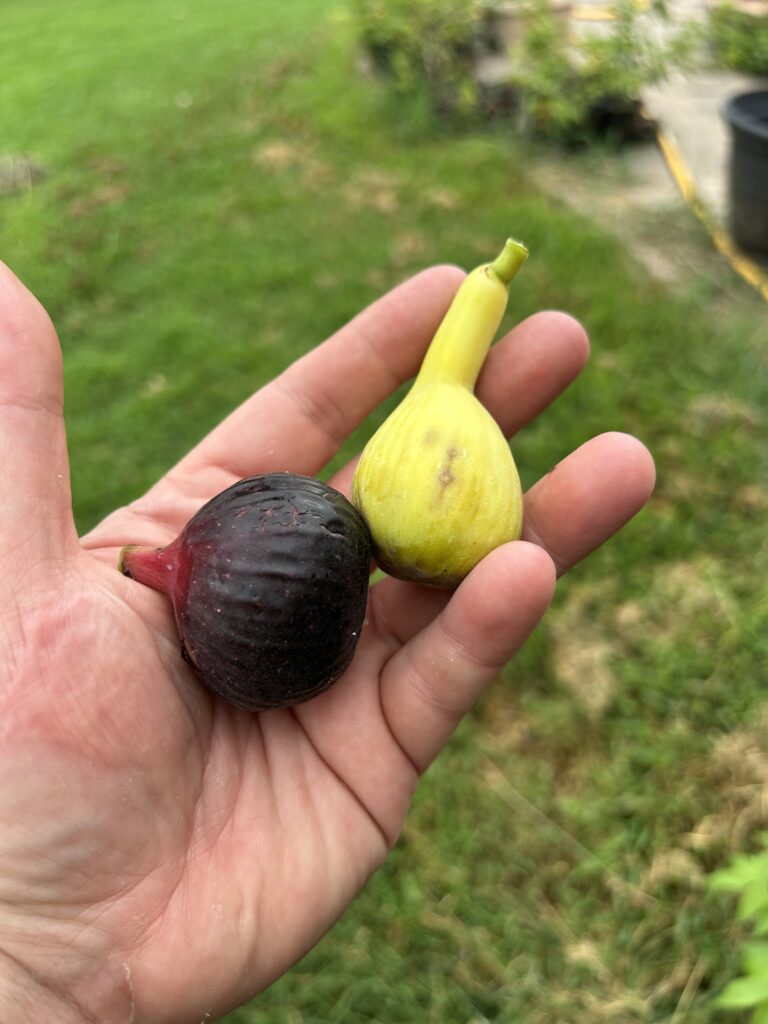
Growing fig trees at home is a great idea because they’re easy to care for and look beautiful in the yard. They don’t need much work, and they reward you with sweet, tasty fruit year after year. Whether you have a big yard or just a patio, figs can fit almost anywhere. With their pretty leaves and dependable harvests, fig trees are an enjoyable and useful addition to any home garden. However be warned, you can get addicted to fig tree collecting. I have close to 100 figs in containers and there are thousands more to choose from.
Comments are closed