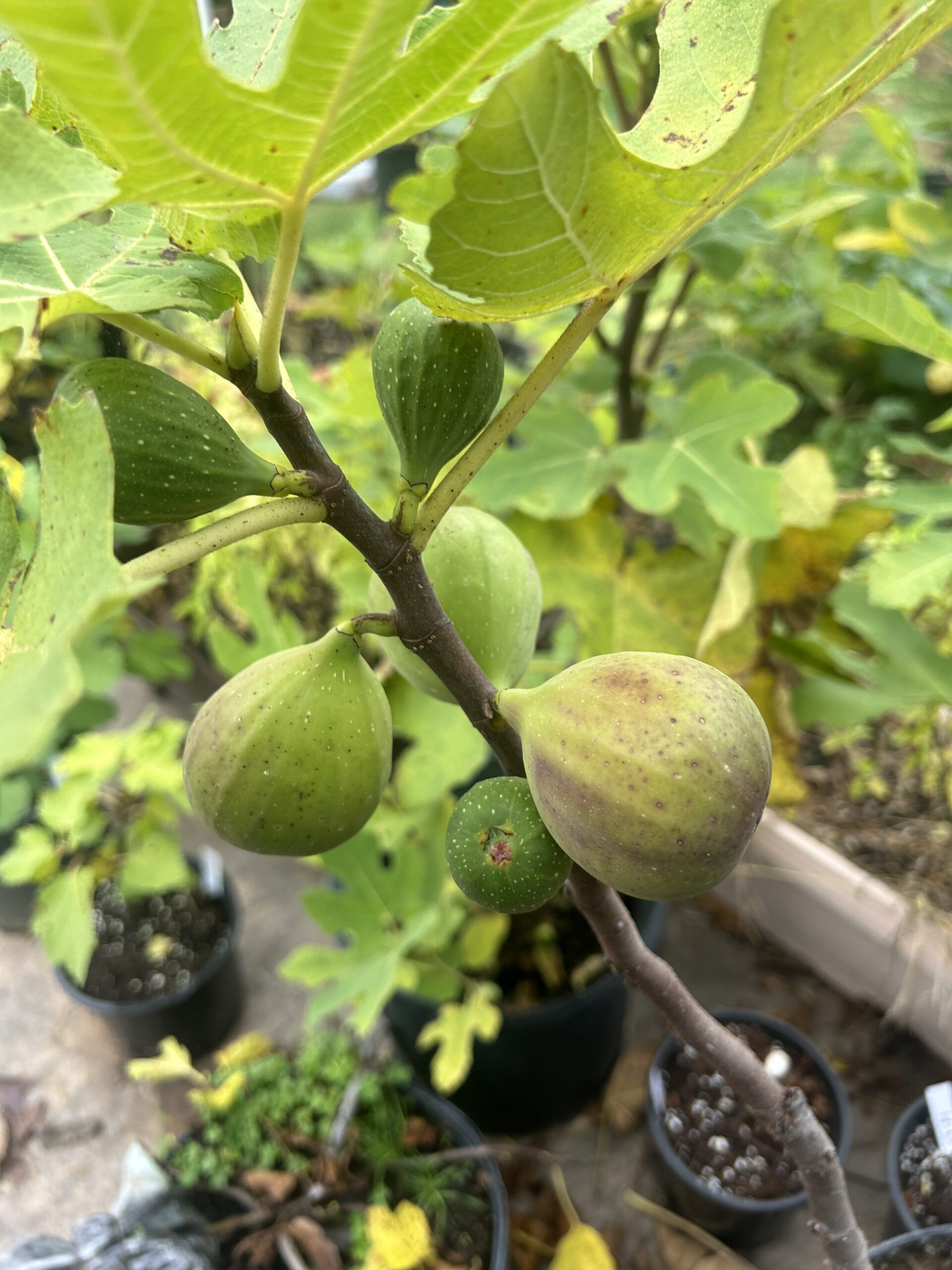
Yes for the most part…
Yes, fig trees are generally self-pollinating, but the specifics depend on the type of fig you are growing.
- Self-pollinating figs: Many modern, popular varieties are self-pollinating and will bear fruit without the need for another tree or fig wasps.
- Non-self-pollinating figs: Some varieties (like Smyrna figs) do require pollination by wasps, meaning you’ll need two trees or specific environmental conditions.
Examples of Self-Pollinating Fig Varieties
- Black Mission Fig (Ficus carica ‘Black Mission’)
- Description: One of the most popular and widely grown fig varieties. It has deep purple to black skin with a rich, sweet flavor and pinkish-red flesh.
- Harvest: Typically ripens in late summer to early fall.
- Why It’s Self-Pollinating: This fig doesn’t need cross-pollination with another tree. It will produce fruit on its own.
- Kadota Fig (Ficus carica ‘Kadota’)
- Description: Known for its yellow-green skin and sweet, honey-like flavor, Kadota figs are often used for making fig preserves and jams.
- Harvest: Ripens in late summer.
- Why It’s Self-Pollinating: This variety is one of the more reliable self-pollinating figs, especially in areas where fig wasps are not common.
- Celeste Fig (Ficus carica ‘Celeste’)
- Description: Also known as the “Sugar Fig”, Celeste figs have a smooth, light purple skin and sweet, rich flesh. It is a smaller fig compared to others but highly flavorful.
- Harvest: Ripens in early to mid-summer.
- Why It’s Self-Pollinating: Like other common figs, Celeste figs are self-pollinating and don’t require other trees or wasps for pollination.
- Brown Turkey Fig (Ficus carica ‘Brown Turkey’)
- Description: Brown Turkey figs have brownish-purple skin and a sweet, mild flavor. It is a hardy variety, often grown in colder climates.
- Harvest: Usually ripens in late summer to early fall.
- Why It’s Self-Pollinating: It’s another self-pollinating fig that is easy to grow without the need for cross-pollination.
- Chicago Hardy Fig (Ficus carica ‘Chicago Hardy’)
- Description: Known for its ability to withstand cold temperatures, Chicago Hardy figs have greenish-brown skin and sweet flesh. It’s a great choice for areas with harsh winters.
- Harvest: Ripens late summer to fall.
- Why It’s Self-Pollinating: Chicago Hardy is a self-pollinating variety, which makes it perfect for regions where other types of figs might require additional care.
- Violette de Bordeaux Fig (Ficus carica ‘Violette de Bordeaux’)
- Description: This variety has dark purple, almost black skin with sweet, rich, and berry-like flesh. It’s known for its intense flavor.
- Harvest: Late summer to early fall.
- Why It’s Self-Pollinating: It’s one of the more prized fig varieties for its flavor, and like other common figs, it’s self-pollinating.
- White Adriatic Fig (Ficus carica ‘White Adriatic’)
- Description: A greenish-yellow fig with sweet, honeyed flesh. It’s often used in Mediterranean cuisines and can be eaten fresh or dried.
- Harvest: Summer to fall.
- Why It’s Self-Pollinating: This fig variety also falls under the common fig category, which is typically self-pollinating.
Why Are These Figs Self-Pollinating?
Self-pollinating figs are part of the common fig (Ficus carica) species, which has evolved to bear fruit without the need for cross-pollination. The flowers of these figs are internal—they grow inside the fig fruit itself. Since the fig wasps typically pollinate external fig flowers (like in Smyrna figs), common figs have a more straightforward process where the fruit forms without requiring the wasps’ help.
In self-pollinating figs, the tree produces both male and female parts within the same flower, allowing the tree to fertilize its own flowers. This is why they don’t rely on another tree for fruit production. These varieties are ideal for home gardeners because you don’t need multiple trees or worry about pollination issues
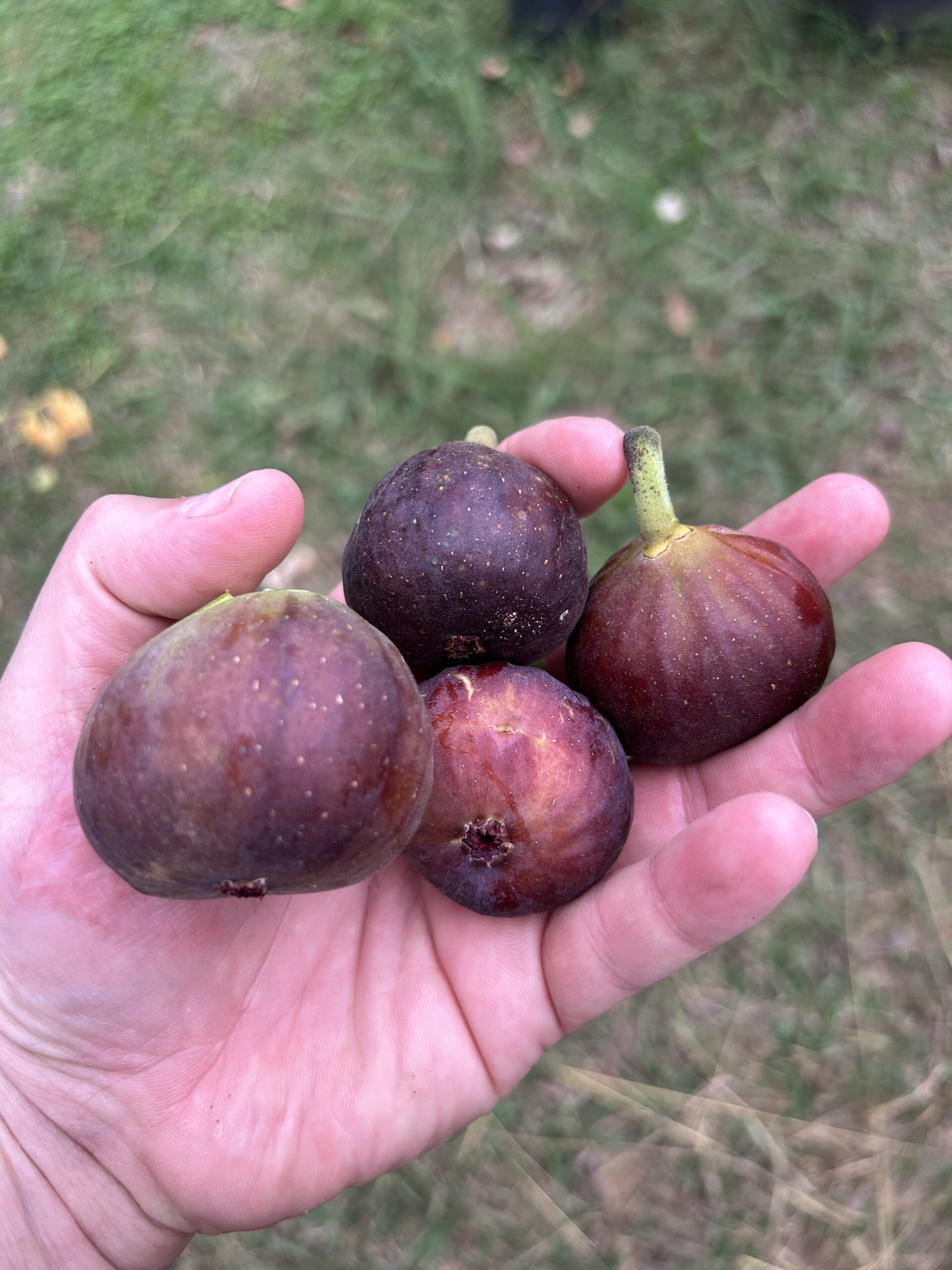
Non Self-Pollinating Figs
Non-self-pollinating figs require cross-pollination for fruit production. These figs need the assistance of fig wasps to pollinate their flowers, which are contained within the fig fruit itself. In these cases, the male fig trees (called Caprifigs) produce the wasps that pollinate the female fig trees (like Smyrna figs or San Pedro figs).
1. Smyrna Figs (Ficus carica)
- Description: Smyrna figs are some of the most famous non-self-pollinating figs. They are large, sweet, and often used in dried fig products. The fig wasps are essential to their production.
- Examples:
- ‘Adriatic’: Greenish skin with a reddish interior, often used for drying.
- ‘Turkish’: Known for its rich, sweet flavor, often dried.
- Pollination Requirement: These figs need the fig wasp (Pleistodontes froggatti) to pollinate them. The wasps emerge from the Caprifig (male fig tree) and travel to the female trees to complete the pollination cycle.
2. San Pedro Figs (Ficus carica)
- Description: San Pedro figs are unique in that they produce two crops per year: a breba crop (early-season) that may not need pollination, and a main crop (late-season) that requires pollination.
- Examples:
- ‘Brunswick’: A large, purple fig, known for its juicy, sweet flesh.
- ‘King’s Purple’: A large, dark fig with a rich, sweet flavor.
- ‘Alma’: A greenish-yellow fig that turns reddish as it ripens.
- Pollination Requirement: While the breba crop doesn’t need pollination (it forms without the assistance of fig wasps), the main crop does require cross-pollination from a Caprifig. This is the key feature of San Pedro figs—they require the presence of fig wasps to pollinate the main crop.
3. Caprifigs (Ficus carica)
- Description: These are the male fig trees that are not typically grown for fruit consumption but are essential for pollinating certain types of female fig trees (Smyrna figs, in particular).
- Examples:
- ‘Marabout’: A well-known Caprifig used in fig wasp propagation.
- Pollination Role: Caprifigs are crucial because they produce the fig wasps that are needed to pollinate female trees. These trees don’t produce edible fruit but are necessary for the pollination cycle of non-self-pollinating figs.
How Pollination Works for Non-Self-Pollinating Figs:
In the case of non-self-pollinating figs like Smyrna and San Pedro varieties, the fig wasps play an essential role in fertilizing the flowers inside the fig fruit:
- Caprifigs (male trees) produce tiny, inedible figs with flowers inside. These flowers produce pollen and fig wasps.
- The fig wasps hatch from these flowers and leave the fig fruit to find and pollinate female fig trees (like Smyrna or San Pedro varieties).
- The wasps enter the female figs, pollinate the flowers inside, and then lay their eggs. The eggs hatch and mature within the fig fruit. The wasps then leave the fig and start the cycle again.
This process is incredibly specific and requires the proper environmental conditions, such as the presence of male trees and fig wasps.
Comments are closed