Complete Guide to Growing Blueberries
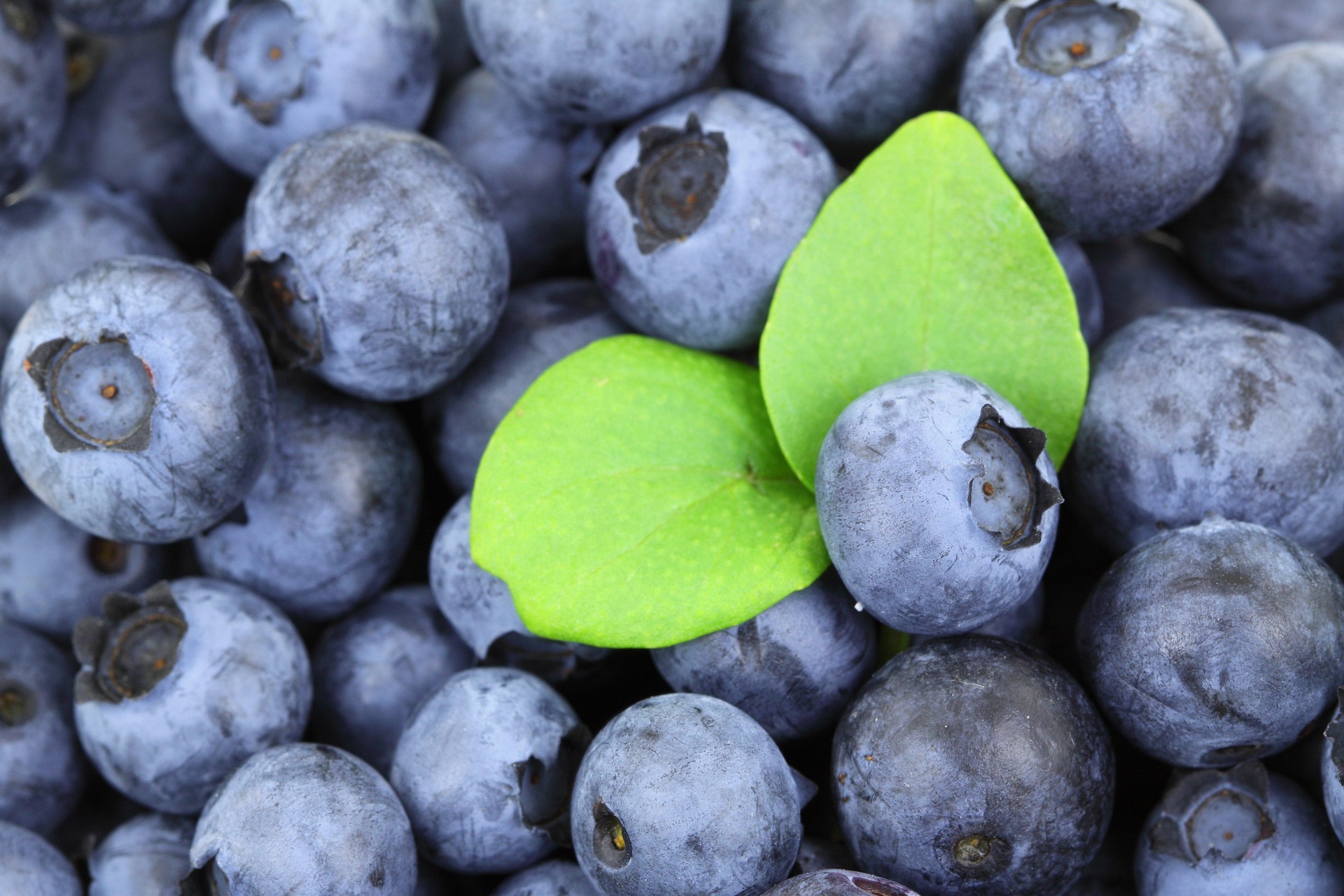
Growing blueberries is an enjoyable and rewarding experience, especially because these plants are not only productive but also beautiful, offering vibrant fall foliage and delicious, antioxidant-packed fruit. Here’s your complete guide to growing blueberries, from choosing the right variety to harvesting your fruit.
1. Choosing the Right Blueberry Variety
There are several types of blueberries, and selecting the right variety is key to successful growth. Blueberries are generally divided into two categories based on their climate preference:
Highbush Blueberries (Vaccinium corymbosum): These are the most common variety for home gardeners. They produce large, sweet berries and are best suited for regions with cold winters and mild summers.
Southern Highbush Blueberries: These are hybrids of highbush varieties and southern species, designed to tolerate warmer climates. They’re perfect for areas where winters are mild.
Rabbiteye Blueberries (Vaccinium ashei): These varieties are more tolerant of heat and drought, making them ideal for the southern U.S. They require a cross-pollinator for optimal fruit production.
Half-High Blueberries: Smaller and more cold-hardy, these are ideal for northern gardeners who need to withstand freezing temperatures.
2. Site Selection and Soil Preparation
Blueberries have specific requirements for soil and sunlight, so site selection is crucial for a successful harvest.
Sunlight
Full sun is best for blueberries, although they will tolerate partial shade. However, to get the highest yields and the sweetest fruit, aim for 6-8 hours of direct sunlight daily.
Soil Conditions
Acidic soil is essential for blueberries. They prefer soil with a pH between 4.5 and 5.5. Test your soil and, if necessary, amend it with elemental sulfur to lower the pH.
Well-drained soil is crucial to prevent root rot. Sandy loam or acidic peat moss mixed with compost is ideal.
Spacing
Space your blueberry plants about 18-24 inches apart in rows that are 4-5 feet apart. Blueberries are fairly compact, but they still need room to grow.
Raised Beds and Containers
If you have heavy clay soil, consider planting blueberries in raised beds or containers. This allows for better drainage and easier pH control.
Top Varieties of Blueberries
Types of Blueberries
Before varieties, it helps to know the main types. Each has pros/cons depending on climate, soil, chill hours, and space:
Northern Highbush — good for cooler/winter-heavy climates (Zones ~4‑7), need enough chill hours; many classic varieties.
Southern Highbush — bred for milder winters, lower chill hours; tolerate warmer conditions.
Rabbiteye — heat-tolerant, good in warmer, more humid southern regions, often later season fruit.
Half-high (or lowbush × highbush hybrids) — smaller plants, hardy, good for pots or zones with very cold winters.
Lowbush — very cold-tolerant, smaller berry, often used in wild plantings or ground cover.
Top Blueberry Varieties Overall
| Variety | Type / Best Climate | Key Strengths & Notes |
|---|---|---|
| Bluecrop | Northern Highbush | Great all-around varieties. Mid-season, good favor and disease resistance. Great reliable performer. |
| Duke | Northern Highbush | Early-season, cold-hardy. Good firm berries. Solid choice |
| Legacy | Northern Highbush | Late-season, excellent flavor, high yield. If your frost-free season is long, this is a very worthwhile choice. |
| Biloxi | Southern Highbush | Low chill requirement, Great for warmer regions. . |
| Brightwell | Rabbiteye | Heat-tolerant; large plants, high yields. Good for southern garden zones. |
| Powder Blue | Rabbiteye | Sweet berries, late season. Great for warmer areas; good drought tolerance. |
| Sunshine Blue | Southern Highbush / Hybrid | small, lower chill hours, grat for pots or milder zones; |
| Pink Lemonade | Hybrid (Rabbiteye × Highbush) | Unique color (pink fruit), incredible flavor; something differnent. One of my favorite |
| Top Hat | Lowbush / “half‑high” type | small, great for containers or limited space. Small, sweet berries. |
| Patriot | Northern Highbush | Cold-hardy, early to mid-season, firm berries. Great for climates with cold winters. |
Matching Variety to Your Conditions
To pick the best blueberry variety, consider:
Chill hours (how many hours at cool/cold temps needed in winter). If your winters are mild, pick low-chill or Southern Highbush types.
Winter cold — if very cold, need varieties hardy to your minimum winter lows.
Heat and humidity — some varieties handle heat (and often disease pressure) better. Rabbiteye and Southern Highbush tend to do better in hot/humid areas.
Soil — blueberries like acidic, well‑draining soil (pH ~4.5‑5.5). If your soil is neutral or alkaline, need amendments.
Space & plant size — if limited space, containers, or decorative uses, go with dwarf or compact types (Top Hat, Sunshine Blue, half-highs).
Harvest window — choosing varieties with different ripening times lets you extend your picking season.
Top Varieties for Zone 5
| Variety | Type | Harvest Time | Plant Size | Flavor | Cold Hardiness | Notes / Strengths |
|---|---|---|---|---|---|---|
| Bluecrop | Northern Highbush | Mid-season | 4–6 ft tall | Sweet-tart, firm | Very hardy (-20°F) | Top all-around variety, reliable yields |
| Duke | Northern Highbush | Early | 4–6 ft tall | Mildly sweet, firm | Very hardy | Consistent producer, good for freezing |
| Patriot | Northern Highbush | Early | 4–5 ft tall | Rich flavor | Extremely hardy (-25°F) | Grows in heavier soils, good container pick |
| Legacy | Northern Highbush | Late | 5–6 ft tall | Excellent, sweet | Hardy enough for Zone 5 | Very productive, extends harvest season |
| Northblue | Half-High Hybrid | Mid to Late | 2–3 ft compact | Wild, sweet | Very hardy (-30°F) | Great for containers or small spaces |
| Northcountry | Half-High Hybrid | Mid | 2–3 ft compact | Mild and sweet | Hardy to -30°F | Early maturity, good for colder gardens |
| St. Cloud | Half-High Hybrid | Mid | 3–4 ft | Sweet and rich | Extremely hardy | Excellent for Upper Midwest climates |
| Top Hat | Dwarf / Lowbush | Mid | 1–2 ft (very small) | Sweet-tart | Hardy to -25°F | Perfect for containers, ornamental too |
Top Varieties for Zone 6
| Variety | Type | Harvest Time | Plant Size | Flavor | Cold Hardiness | Highlights |
|---|---|---|---|---|---|---|
| Bluecrop | Northern Highbush | Mid-season | 4–6 ft tall | Sweet-tart, firm | -20°F (Zone 4) | #1 all-around variety, disease-resistant |
| Duke | Northern Highbush | Early | 4–6 ft tall | Mild, firm | -20°F | Reliable early harvest, very productive |
| Legacy | Northern Highbush | Late | 5–6 ft tall | Outstanding sweetness | -10°F (Zone 6+) | High yield, long harvest, top flavor |
| Patriot | Northern Highbush | Early | 4–5 ft tall | Rich flavor | -25°F | Adaptable to wet/heavy soils |
| Jersey | Northern Highbush | Late | 6–7 ft tall | Very sweet | -20°F | Classic variety, great for baking/preserves |
| Chandler | Northern Highbush | Mid to Late | 5–6 ft tall | Mild, huge berries | -10°F (Zone 6+) | Largest berries (~1 inch), extended season |
| Northland | Half-High Hybrid | Mid | 3–4 ft | Sweet & wild-like | -30°F | Very hardy, great in windy/exposed sites |
| Sunshine Blue | Southern Highbush | Mid to Late | 3–4 ft (compact) | Sweet, mild | ~0°F (Zone 6) | Low chill, semi-evergreen, container-ready |
| Top Hat | Dwarf / Lowbush | Mid | 1–2 ft | Tangy-sweet | -25°F | Very compact, decorative and edible |
Top Varieties for Zone 7
| Variety | Type | Harvest Time | Size | Flavor | Cold Hardiness | Best For |
|---|---|---|---|---|---|---|
| Legacy | Northern Highbush | Late | 5–6 ft | Sweet, excellent | Hardy to Zone 6 | Long season, high quality berries |
| Bluecrop | Northern Highbush | Mid | 4–6 ft | Balanced sweet/tart | Zone 4–7 | Reliable yields, adaptable |
| Duke | Northern Highbush | Early | 4–6 ft | Mild, firm | Zone 4–7 | Early harvest, heavy producer |
| Chandler | Northern Highbush | Mid to Late | 5–6 ft | Mild, very large berries | Zone 6–8 | Largest berries, extended harvest |
| O’Neal | Southern Highbush | Early | 4–6 ft | Sweet, rich | Zone 7–9 | Low chill, great flavor, early crop |
| Sunshine Blue | Southern Highbush | Mid to Late | 3–4 ft (compact) | Sweet | Zone 7–10 | Semi-evergreen, self-fertile, great for pots |
| Sharpblue | Southern Highbush | Early to Mid | 4–6 ft | Mildly sweet | Zone 7–10 | Long harvest, heat tolerant |
| Brightwell | Rabbiteye | Mid | 6–8 ft | Sweet, firm | Zone 7–9 | Very productive, heat/drought tolerant |
| Tifblue | Rabbiteye | Late | 6–8 ft | Tangy-sweet | Zone 7–9 | Vigorous, best pollinated with another variety |
| Premier | Rabbiteye | Early to Mid | 6–8 ft | Sweet and large | Zone 7–9 | High yields, consistent performer |
Top Varieties for Zone 8
| Variety | Type | Harvest Time | Height | Flavor | Chill Hours | Highlights |
|---|---|---|---|---|---|---|
| O’Neal | Southern Highbush | Early | 4–6 ft | Rich, sweet | ~500 | Excellent flavor, one of the best-tasting types |
| Sunshine Blue | Southern Highbush | Mid | 3–4 ft (compact) | Mild and sweet | ~150 | Semi-evergreen, small space/container-friendly |
| Sharpblue | Southern Highbush | Early–Mid | 4–6 ft | Mild, juicy | ~200–300 | Heat-tolerant, low chill, long harvest |
| Jubilee | Southern Highbush | Mid | 5–6 ft | Balanced sweet/tart | ~400–500 | Upright grower, good for fresh eating |
| Misty | Southern Highbush | Early | 4–6 ft | Very sweet | ~300 | Great pollinator for other Southern Highbush |
| Emerald | Southern Highbush | Early–Mid | 5–6 ft | Large, mild-sweet | ~250 | Large berries, low chill, reliable producer |
| Brightwell | Rabbiteye | Mid | 6–8 ft | Sweet, firm | ~300–400 | Vigorous, productive, heat and drought tolerant |
| Tifblue | Rabbiteye | Late | 6–8 ft | Tangy, firm | ~600 | Needs pollinator, productive and tough |
| Premier | Rabbiteye | Early–Mid | 6–8 ft | Large, sweet | ~400–500 | Great yields, strong pollinator |
| Powderblue | Rabbiteye | Late | 6–8 ft | Sweet, smaller berries | ~600 | Reliable, resis |
4. Planting Blueberries
When to Plant: Blueberries can be planted in early spring (once the ground is workable) or in fall (before the first frost). Spring planting gives the plants a full growing season to establish themselves.
How to Plant:
Dig a hole that’s about 18 inches wide and 18 inches deep. If planting in a row, make sure the plants are spaced accordingly.
Add compost or peat moss to the hole to improve soil texture and acidity.
Place the root ball of the plant in the hole, making sure the crown (the point where roots meet stems) is level with the soil surface.
Fill the hole with soil and gently pack it in around the roots. Water well after planting.
Watering: Water deeply after planting, ensuring the roots are well hydrated. Keep the soil moist but not soggy throughout the growing season.
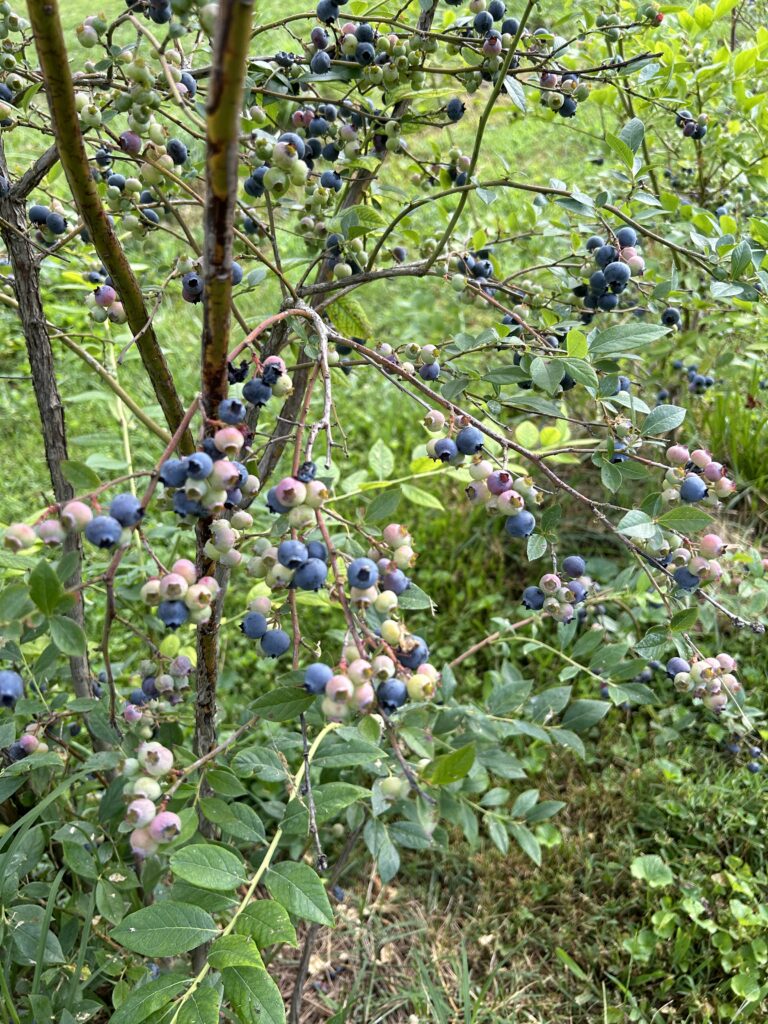
5. Caring for Blueberries
Blueberries are low-maintenance, but they still need proper care to thrive and produce bountiful fruit.
Watering
Blueberries have shallow roots, so they need consistent moisture, especially in hot weather. Use drip irrigation or water deeply around the base of the plant, avoiding wetting the foliage.
Keep the soil evenly moist, particularly during the growing and fruiting seasons. Blueberries are sensitive to drought, which can reduce fruit production.
Mulching
The best mulch for blueberries supports their love for acidic, moist, well-drained soil and helps suppress weeds, regulate soil temperature, and maintain acidity.
Best Mulch Types for Blueberries
| Mulch Type | Why It’s Good | Application Depth | Notes |
|---|---|---|---|
| Pine needles | Naturally acidic, breaks down slowly, prevents weeds | 2–4 inches | Excellent long-term mulch, especially in acidic soils |
| Pine bark (mini nuggets) | Acidic, woody texture improves soil structure | 2–3 inches | Ideal for long-term mulching; avoid large chunks |
| Sawdust (aged softwood) | Retains moisture, acidifies slightly when aged | 2–3 inches | Use aged sawdust to avoid nitrogen tie-up |
| Wood chips (aged) | Good moisture retention and weed control; mild acidity | 2–4 inches | Don’t pile against stems; use only aged chips |
| Composted leaves (leaf mold) | Adds organic matter, light and fluffy, helps hold moisture | 2–3 inches | Great in combo with pine mulch or bark |
| Straw (clean, weed-free) | Good insulator, helps moisture, low cost | 3–4 inches | Not acidic, but can be used short-term |
Avoid These Mulches:
| Mulch Type | Why Not |
|---|---|
| Fresh sawdust or wood chips | Ties up nitrogen while decomposing; may harm young plants |
| Black plastic | Overheats roots, blocks air and water |
| Grass clippings | Can mat down, heat up, and cause rot |
| Manure-based composts | Usually too alkaline for blueberries |
Mulching Tips:
Apply mulch in spring after the soil warms slightly.
Replenish mulch every 1–2 years as it breaks down.
Keep mulch 2–3 inches away from plant stems to avoid rot.
For sandy soils, mulch is extra important to retain moisture.
Bonus Tip:
If your soil pH is creeping above 5.5, use elemental sulfur or mulch more heavily with pine needles or bark to help maintain acidity.
Would you like a custom mulching plan for blueberries in containers or raised beds?
Fertilizing
Blueberries are sensitive to fertilizers, so it’s best to use one specifically formulated for acid-loving plants.
In early spring, apply a balanced, slow-release fertilizer.
Avoid fertilizing in late summer, as this can stimulate late-season growth that will be vulnerable to winter damage.
The best fertilizer for blueberries supports their specific needs: acidic soil, low salt tolerance, and preference for ammonium nitrogen (not nitrate).
Best Fertilizers for Blueberries
| Type | Product Example | Why It’s Good | When to Use |
|---|---|---|---|
| Ammonium sulfate (21-0-0) | Soil sulfur + nitrogen | Acidifies soil + provides usable nitrogen | Early spring + post-bloom (split doses) |
| Acid-loving plant fertilizer | e.g. Holly-tone (4-3-4), or Miracle-Gro Acid-Loving Plants (30-10-10) | Balanced nutrients, pH friendly | Monthly during growing season |
| Urea (46-0-0) | Often coated, slow-release preferred | High N, less acidifying than ammonium sulfate | Only if soil pH is already low |
| Organic options | Cottonseed meal, fish emulsion, blood meal | Gentle, slow-release, naturally acidic | Spring through summer |
| Compost / pine bark mulch | Homemade or aged | Adds organic matter, maintains pH if acidic | Year-round as soil conditioner |
Avoid:
Nitrate-based fertilizers (e.g., calcium nitrate or potassium nitrate) – blueberries don’t like nitrate forms of nitrogen.
Lime-based fertilizers – these raise soil pH, which blueberries hate.
Annual Blueberry Fertilizer Amounts
| Plant Age | Synthetic Fertilizer (e.g. 10-10-10 or ammonium sulfate) | Organic Fertilizer (e.g. Holly-tone, Cottonseed Meal) | Application Notes |
|---|---|---|---|
| 1st Year | 1 oz (2 tbsp) per plant, split in 2 doses | 1/4–1/2 cup per plant, split in 2 doses | Start 4–6 weeks after planting |
| 2nd Year | 2 oz per plant, split in 2 doses | 1/2–3/4 cup per plant, split | Apply early & late spring |
| 3rd Year | 3 oz per plant, split in 2 doses | 3/4–1 cup per plant, split | Water well after application |
| Mature Plants (4+ yrs) | 4 oz per plant (or 1–2 lbs per 100 ft of row) | 1–1.5 cups per plant | Maintain pH 4.5–5.5 with sulfur if needed |
Fertilizer Timing by Season
| Time | What to Apply |
|---|---|
| Early Spring (bud swell) | ½ of annual nitrogen dose (e.g., ammonium sulfate) |
| Late Spring (after bloom) | Apply remaining nitrogen dose |
| Mid-summer (optional) | Light application if growth is weak or slow |
| Fall | Do not fertilize – can cause tender growth before frost |
Soil Tip:
Test your soil pH every 1–2 years.
Ideal pH for blueberries: 4.5 to 5.5.
If it’s too high, use sulfur or acidic organic matter (like pine needles) to lower it.
Best Fertilizer Brands (Examples)
| Brand | Product |
|---|---|
| Espoma | Holly-tone (4-3-4) – organic, pH-friendly |
| Down to Earth | Acid Mix (4-3-6) – organic, slow release |
| Miracle-Gro | Water Soluble for Acid-Loving Plants (30-10-10) |
| Jobe’s | Azalea, Camellia & Rhododendron Spikes |
| Dr. Earth | Acid Lovers Organic (3-4-3) |
Pruning
Pruning is crucial to maintaining healthy plants and maximizing fruit production.
First year: Allow the plant to grow without fruiting in its first year. Remove any flowers to encourage root development.
Subsequent years: In early spring, prune out dead, damaged, or weak branches. Keep the plant open and upright by removing older canes that have stopped producing.
Pollination
While blueberries can self-pollinate, they produce larger, better fruit when cross-pollinated with another variety. Consider planting at least two different varieties for optimal pollination and fruit set.
6. Pests and Diseases
Blueberries are generally pest-resistant, but there are still a few common issues you may encounter.
Common Pests
Birds: Blueberries are a favorite of birds, so netting can help protect your fruit. Install bird netting once berries begin to ripen.
Aphids: These small insects can be controlled with insecticidal soap or a blast of water.
Blueberry Maggot: This pest causes holes in the berries. Use traps to detect infestations early and remove any affected fruit.
Diseases
Powdery Mildew: This fungal disease can be controlled by ensuring good air circulation and removing infected plant parts.
Root Rot: Caused by overwatering or poor drainage, root rot can be prevented by planting blueberries in well-drained soil.
Mummy Berry Disease: A fungal disease that can be controlled by removing infected fruit and debris.
General Tips for Disease Prevention
Rotate your crops.
Keep your blueberry patch clean and tidy.
Ensure good air circulation by spacing plants properly.
Avoid working with wet plants to reduce the spread of disease.
7. Harvesting Blueberries
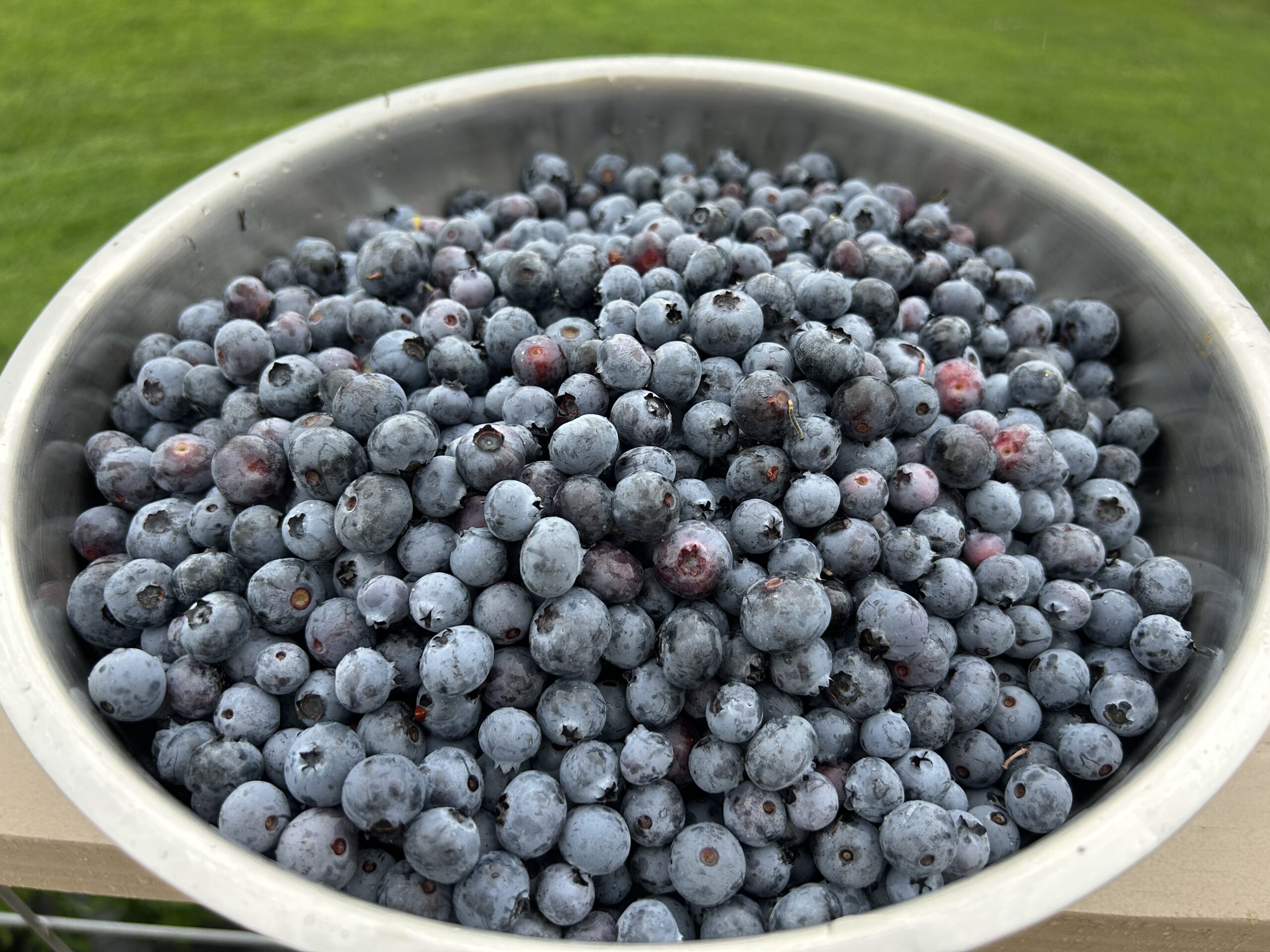
When to Harvest: Blueberries typically ripen in mid to late summer (depending on variety). The fruit should be fully blue (without any red or green patches) and should easily detach from the plant when you gently pull on them.
How to Harvest: Gently pick the berries to avoid crushing them. You can also use a berry rake or a small handheld harvesting tool to speed up the process, but be gentle to avoid damaging the plant.
Post-Harvest: Blueberries are delicate, so refrigerate them immediately after harvesting. They will last for up to 10-14 days in the fridge. For long-term storage, freeze them by spreading the berries out on a tray to freeze individually before placing them in bags or containers.
8. Winter Care for Blueberries
Blueberries are fairly hardy, but they still need protection in colder climates.
Mulching: Apply a thick layer of mulch around the base of the plants before the first frost to protect the roots from freezing.
Snow Protection: Snow is a natural insulator for blueberries, so don’t worry about snowfall. If winters are dry, you may need to water the plants occasionally to prevent desiccation.
Container Plants: If you’re growing blueberries in pots, bring them into a cool, unheated garage or shed during the winter, or wrap the pots in burlap to protect the roots from freezing.
9. Additional Tips for Success
Companion Planting: Blueberries are great companions for other acid-loving plants such as cranberries, azaleas, and rhododendrons.
Fertilizer: Always choose a fertilizer made for acid-loving plants to avoid raising the pH of the soil.
Patience: Blueberries are slow to establish, but once they do, they can produce for 10-20 years! The first few years may yield small harvests, but as the plants mature, your yield will increase significantly.
Protect from Frost: Frost can damage flowers in the spring, so if your area experiences late frosts, you may need to protect your plants with row covers or by wrapping the plants with blankets.
Conclusion
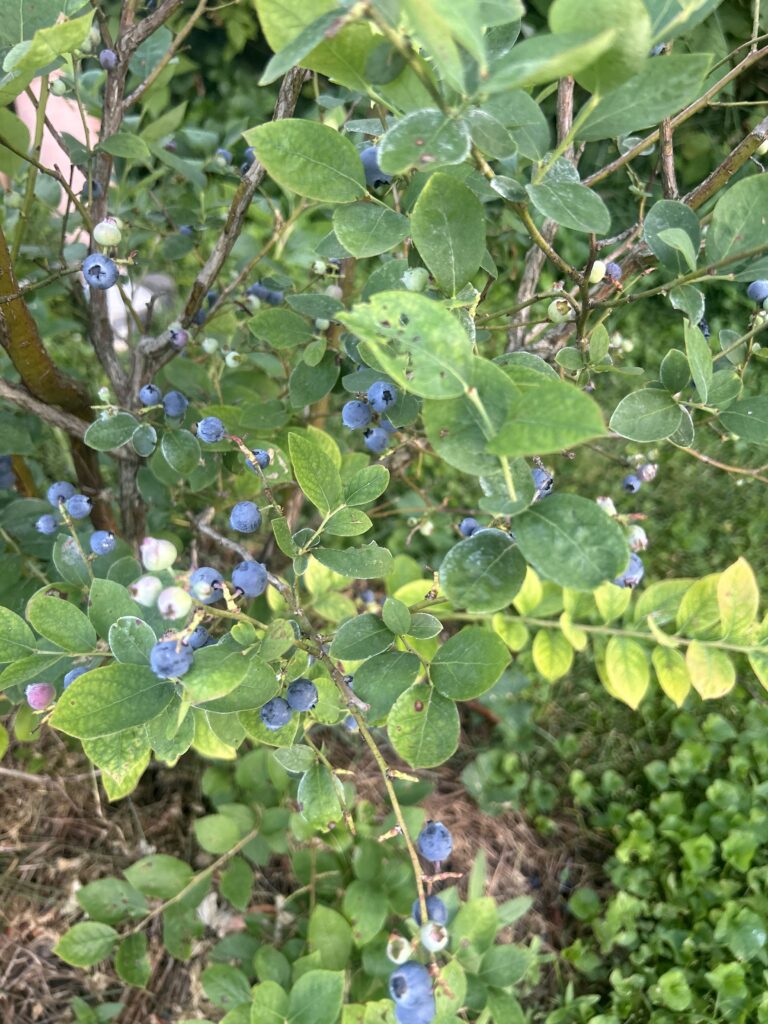
Growing blueberries can be a long-term commitment, but with the right care and attention, they will reward you with bountiful, delicious fruit year after year. Whether you’re growing a small patch in your backyard or cultivating a larger berry farm, following these guidelines will help ensure healthy plants and a plentiful harvest. Happy gardening!