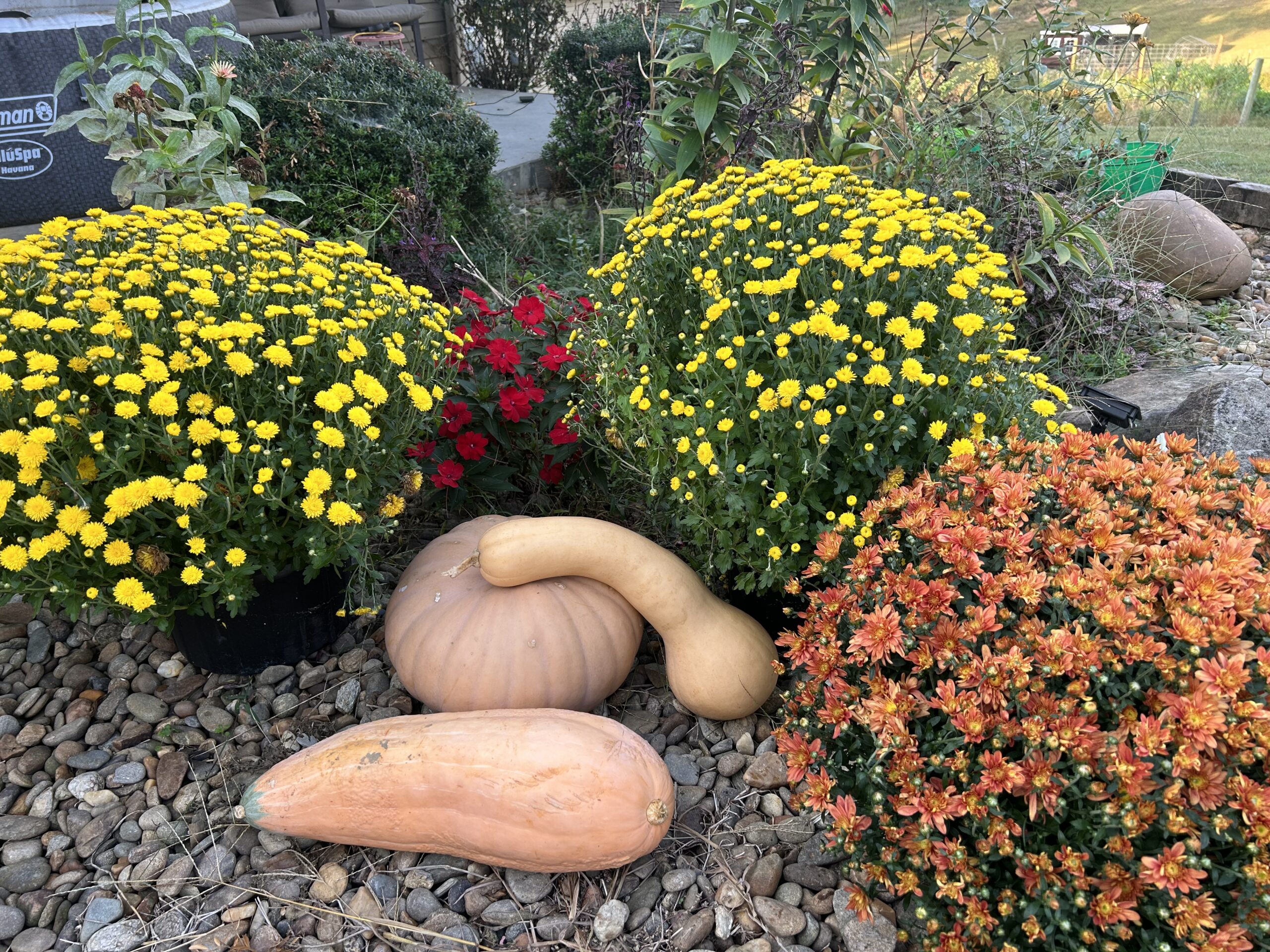
I really enjoy a fall garden for many reasons. Gardening in the fall offers several unique advantages that can actually make it easier and more rewarding than spring or summer gardening
Advantages of Fall Gardening
Cooler Temperatures = Happier Plants (and Gardeners)
- Many vegetables like lettuce, spinach, kale, and broccoli actually prefer cool weather.
- Cooler weather reduces heat stress, leading to better-tasting greens and more productive plants.
- You won’t be sweating buckets while weeding or harvesting.
Fewer Pests and Diseases
- Many garden pests (like aphids, beetles, and cabbage worms) decline as temperatures drop.
- Fungal diseases are less aggressive in the cooler, drier fall air.
Better Flavor in Cool-Weather Crops
- Frost improves the flavor of crops like kale, carrots, and Brussels sprouts, making them sweeter due to increased sugar production.
Less Watering Required
- Cooler temperatures and lower evaporation rates mean you can water less frequently, saving time and resources.
Weed Pressure is Lower
- Weeds grow more slowly in the fall, making garden maintenance easier.
Soil Is Still Warm
- Even though the air is cooler, the soil retains summer warmth, encouraging quick germination and root development.
Extended Harvest Season
- With the right planning, you can harvest fresh vegetables through fall and even into winter with cold frames, row covers, or mulch.
Zone 6
In Zone 6, September is prime time for planting cool-season crops for a fall harvest and even overwintering some with protection. Your average first frost is typically in mid to late October, so you have several weeks to plant quick growers and hardy vegetables that thrive in cooler temps.
What You Can Plant in September
Direct Sow (from seed)
Best for fast-growing or frost-tolerant crops
- Spinach – will thrive into winter with mulch or row cover
- Radishes – mature in just 3–4 weeks
- Arugula – peppery, cold-tolerant, fast
- Lettuce – choose cold-hardy varieties (e.g. Winter Density, Buttercrunch)
- Turnips – edible roots and greens
- Mustard Greens – frost-tolerant and flavorful
- Collards – sweetens after a frost
- Kale – extremely hardy; great overwintered
- Mâche (Corn Salad) – thrives in cold, perfect for winter salads
- Claytonia (Miner’s Lettuce) – another excellent winter green
Transplant or Start Indoors (ASAP)
Use starts for slower-growing crops like:
- Broccoli
- Cabbage
- Cauliflower
- Brussels Sprouts (if not already planted, focus on fast-maturing types)
Plant Later in the Month (Mid to Late September)
- Garlic – plant mid/late Sept through October
- Shallots
- Onion sets – for overwintering (look for fall planting varieties)
Bonus: Flowers and Herbs
- Herbs (cold hardy):
- Cilantro – thrives in cool weather
- Parsley – cold-hardy, often overwinters with mulch
- Chives – perennial, fine to plant in fall
- Wildflowers – sow hardy perennial wildflower seeds for spring blooms
- Spring bulbs – wait until late fall, but prep beds now (daffodils, tulips, etc.)
Fall Gardening Tips for Zone 6
- Use row covers, cloches, or cold frames to extend your season by several weeks.
- Mulch root crops (like carrots, beets, and turnips) heavily to harvest through winter.
- Amend soil with compost or organic matter as crops finish out.
- Sow cover crops in empty beds (e.g. crimson clover, winter rye) to protect and enrich the soil.
Zone 7
In USDA Zone 7, September is a great time to plant cool-season crops and prepare for a fall or even overwintering harvest. The first frost usually comes between mid-October to early November, so you still have time for short-season crops or to plant hardy vegetables that can withstand frost.
Vegetables to Plant in September
From Seed (direct sow):
- Spinach – great for fall/winter harvest, especially if overwintered.
- Radishes – fast-growing; ready in 3–4 weeks.
- Lettuce – choose cold-tolerant varieties like ‘Winter Density’ or ‘Romaine’.
- Turnips – both roots and greens are usable.
- Mustard Greens
- Arugula – quick growing and frost-tolerant.
- Collard Greens
- Kale – sweetens after a frost.
- Beets – plant early in September.
- Carrots – plant early for small roots before frost or mulch heavily for overwintering.
From Transplants (or start indoors to transplant soon):
- Broccoli
- Cauliflower
- Cabbage
- Brussels Sprouts
Herbs
- Cilantro – thrives in cool weather.
- Parsley – can overwinter with mulch.
- Chives – hardy perennial.
- Thyme, Sage, Oregano – can still be planted if grown in containers or beds with good drainage.
Other Gardening Tasks in September
- Plant garlic in late September through October.
- Plant cover crops (like clover or winter rye) in unused beds.
- Mulch perennials to retain warmth and moisture.
- Divide and transplant perennials.
- Sow wildflower seeds for next spring.
Zone 8
In Zone 8, September is a prime time to plant a wide variety of cool-season crops, and you have a longer growing window before the first frost—typically late October to mid-November. That means you can grow both fast-maturing vegetables and those that thrive in cool temperatures well into fall and even winter.
What You Can Plant in September
Direct Sow (From Seed)
These crops grow quickly and thrive in cooler weather.
- Spinach
- Arugula
- Lettuce (Romaine, Butterhead, Winter Density)
- Radishes
- Turnips (for greens and roots)
- Mustard Greens
- Beets
- Carrots
- Collards
- Kale
- Mâche (Corn Salad)
- Claytonia (Miner’s Lettuce)
Transplant or Start Indoors (Early September)
Best for slower growers or fall brassicas.
- Broccoli
- Cauliflower
- Cabbage
- Brussels Sprouts
- Swiss Chard
Plant Later in the Month (Mid–Late September)
- Garlic – softneck types do well in Zone 8; plant late Sept–Nov
- Shallots
- Multiplying Onions or Overwintering Onions
- Bulb Fennel – needs cool temps to bulb properly
Herbs to Plant in September
- Cilantro – thrives in cool weather
- Parsley – slow to mature but cold-hardy
- Chives
- Thyme, Oregano, Sage – perennial herbs that can be planted now
Tips for Successful Fall Gardening in Zone 8
- Start early in the month for crops that take 45–60 days (like beets, carrots, broccoli).
- Use row covers or cold frames to extend your growing season into winter.
- Apply mulch around crops to conserve moisture and moderate soil temperature.
- Harvest leafy greens frequently to encourage regrowth before frost.
- Consider sowing a cover crop (like crimson clover or winter rye) in empty beds by late fall.
Fall gardening is a rewarding way to extend your growing season and enjoy fresh produce well into the cooler months. With milder temperatures, fewer pests, and less watering needed, it’s ideal for growing cool-season crops like leafy greens, root vegetables, and hardy herbs. Many vegetables, such as kale, spinach, and carrots, even develop better flavor after a light frost. Fall is also the perfect time to plant garlic, onions, and cover crops to prepare your soil for spring. With the right timing and a bit of protection, a fall garden can provide abundant harvests and set the stage for a successful year ahead. It will continue to be my most favorite time of the year.
Comments are closed