Complete Guide to Growing Grapes
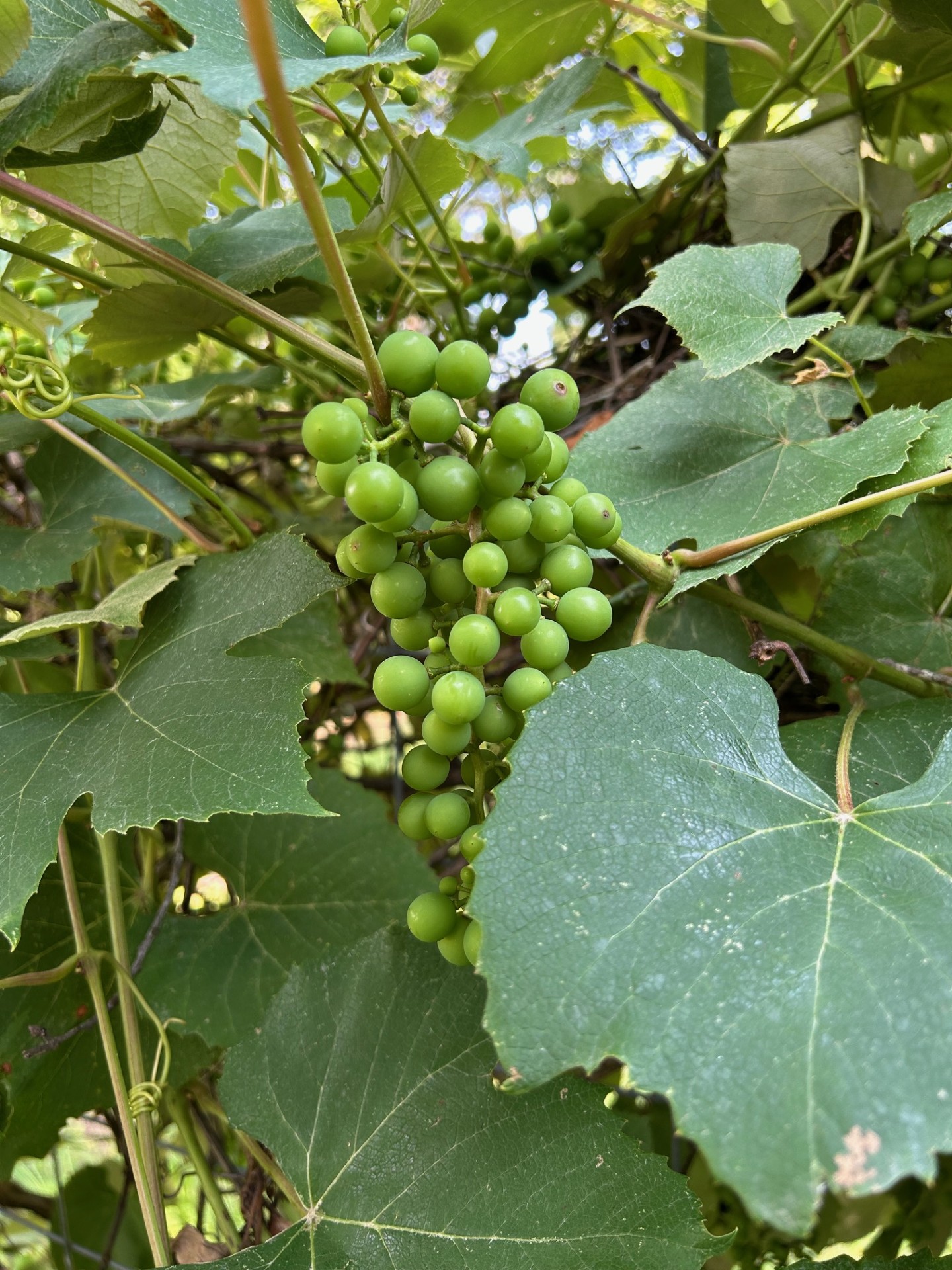
I love growing grapes I think the vines are beautiful, they have multiple uses, and overall need little care. Growing grapes is a rewarding experience, whether you’re cultivating them for fresh eating, wine production, or making jellies and jams. Grapevines are relatively low-maintenance but require proper care, a good planting site, and an understanding of their growth habits. This comprehensive guide will walk you through the process of growing healthy and productive grapevines, from selecting the right varieties to harvesting the fruit.
1. Choosing the Right Grape Variety
The first step in growing grapes is selecting the right variety based on your climate, desired use (e.g., table grapes, wine grapes, or juice), and personal preferences.
Main Types of Grapes:
Table Grapes:
These grapes are eaten fresh and are typically larger and sweeter. Some popular varieties include:
‘Thompson Seedless’ (green)
‘Red Globe’ (red)
‘Cotton Candy’ (sweet and unique flavor)
Wine Grapes:
These varieties are used for making wine. They require specific growing conditions, including a long growing season and dry weather at harvest. Common wine grape varieties include:
Cabernet Sauvignon
Chardonnay
Merlot
Pinot Noir
Juice and Jelly Grapes:
These grapes are smaller, sweeter, and often used for making juices, jellies, and jams. Popular varieties include:
‘Concord’ (deep purple, very sweet)
‘Niagara’ (green, aromatic)
Climate Considerations:
Hardiness Zones: Most grapes grow best in USDA hardiness zones 5–9.
Temperature: Grapes thrive in warm regions with hot, dry summers and cold winters. Wine grapes, in particular, require long, hot summers.
Frost Resistance: Grapevines are sensitive to frost, so choose varieties that are suited to your region’s climate and plant them in areas that are frost-free after the last spring frost.
2. Site Selection and Soil Preparation
Grapevines need specific conditions to grow successfully. Here’s what you need to consider when selecting the best spot for your vines.
Sunlight:
Grapes require full sun (at least 7–8 hours of direct sunlight per day) for optimal growth and fruit production. Choose a south- or west-facing site if possible.
Soil:
Well-draining soil is crucial. Grapes do not like “wet feet,” or soggy roots, so ensure the soil drains well.
Soil pH: Grapes prefer slightly acidic to neutral soil with a pH between 5.5 to 7.0. If your soil is too acidic, you can raise the pH by adding lime. If it’s too alkaline, you can lower the pH with sulfur or peat moss.
Soil Fertility: Grapes are moderately low feeders, so rich soil isn’t necessary. In fact, overly fertile soil may result in excessive leafy growth at the expense of fruit production.
Spacing:
Grapevines require space to spread. Space vines about 6–8 feet apart in rows that are 8–10 feet apart.
For trellises, ensure you have at least 6–8 feet of vertical space for the vines to grow upward.
3. Top Grape Varieties
The best grape varieties to grow depend heavily on your climate, soil type, and whether you want them for wine, table grapes, juice, or raisins.
Top Wine Grape Varieties
1. Cabernet Sauvignon
Use: Red wine
Climate: Warm to hot
Notes: Durable, disease-resistant, world-famous for aging potential
2. Chardonnay
Use: White wine
Climate: Cool to warm
Notes: Versatile, easy to grow, widely planted
3. Pinot Noir
Use: Red wine
Climate: Cool
Notes: Delicate and high-quality, but harder to grow (disease-sensitive)
4. Merlot
Use: Red wine
Climate: Moderate
Notes: Softer and fruitier than Cabernet Sauvignon
5. Syrah / Shiraz
Use: Red wine
Climate: Warm to hot
Notes: Bold and spicy wines, fairly easy to grow
6. Riesling
Use: White wine
Climate: Cool
Notes: Aromatic, thrives in cooler areas with long ripening seasons
7. Sauvignon Blanc
Use: White wine
Climate: Cool to moderate
Notes: Crisp, aromatic, often used in blends
Top Table Grape Varieties (Eating Fresh)
1. Thompson Seedless (Sultana)
Climate: Warm
Notes: Sweet, green, also used for raisins and juice
2. Concord
Climate: Cool to moderate
Notes: Deep purple, used for fresh eating, jelly, and juice
3. Red Globe
Climate: Warm
Notes: Large red grapes with seeds, visually appealing
4. Cotton Candy
Climate: Warm
Notes: Uniquely sweet, popular in farmer’s markets
5. Moon Drops
Climate: Warm
Notes: Long, black grapes with a unique shape
Top Juice & Jelly Grape Varieties
1. Concord
Climate: Cool to moderate
Notes: Signature grape flavor for juice and jelly
2. Niagara
Climate: Moderate
Notes: White grape, used for juice, jelly, and wine
Top Raisin Grape Varieties
1. Thompson Seedless
Climate: Hot and dry
Notes: Most widely used for raisins
2. Black Corinth (Zante Currant)
Climate: Warm
Notes: Tiny seedless black grapes used in baking
Top Varieties Zone 5
| Purpose | Recommended Varieties | Notes |
|---|---|---|
| Wine (Red) | • Frontenac • Marquette • Marechal Foch | Cold-hardy hybrids, good for robust red wines |
| Wine (White) | • La Crescent • Brianna • Edelweiss | Cold-climate whites with good flavor and aroma |
| Table Grapes | • Concord • Somerset Seedless • Beta | Concord is classic; Somerset is seedless with strawberry-like flavor |
| Juice / Jelly | • Concord • Niagara • Fredonia | Niagara = white version of Concord; Fredonia ripens earlier |
| Raisins | Not ideal in Zone 5 (too cool & humid) | Consider drying indoors if trying with Concord or Somerset |
Top Varieties Zone 6
| Purpose | Recommended Varieties | Notes |
|---|---|---|
| Wine (Red) | • Marquette • Frontenac • Chambourcin • Marechal Foch | Cold-hardy hybrids; Chambourcin is a French-American hybrid with good wine quality |
| Wine (White) | • La Crescent • Seyval Blanc • Vidal Blanc • Traminette | Traminette is aromatic; Vidal is great for sweet/dessert wines |
| Table Grapes | • Concord • Niagara • Mars (seedless) • Somerset Seedless | Mars and Somerset are flavorful, cold-hardy seedless grapes |
| Juice/Jelly | • Concord • Niagara • Fredonia | Concord and Niagara dominate juice/jelly production |
| Raisins | • Mars • Somerset Seedless • Vanessa | Indoor drying may be needed; Somerset has excellent flavor for drying |
Top Varieties Zone 7
| Purpose | Recommended Varieties | Notes |
|---|---|---|
| Wine (Red) | • Cabernet Franc • Chambourcin • Norton • Syrah • Zinfandel (some sites) | Cabernet Franc is more cold-tolerant; Norton is a native American variety |
| Wine (White) | • Chardonnay • Viognier • Riesling • Seyval Blanc • Vidal Blanc | Classic whites with good results in Zone 7 if well-sited |
| Table Grapes | • Mars (seedless) • Reliance (pink, seedless) • Venus • Niagara • Concord | Many seedless varieties thrive; Concord and Niagara also good for juice |
| Juice/Jelly | • Concord • Niagara • Fredonia • Catawba | Concord dominates; Catawba is a red juice grape used in sparkling wines too |
| Raisins | • Thompson Seedless • Mars • Sunbelt • Vanessa | With dry late summers, raisins are very possible outdoors |
Top Varieties Zone 8
| Purpose | Recommended Varieties | Notes |
|---|---|---|
| Wine (Red) | • Cabernet Sauvignon • Syrah/Shiraz • Tempranillo • Grenache • Zinfandel | Classic warm-climate wine grapes; ripen well in Zone 8 |
| Wine (White) | • Chardonnay • Viognier • Roussanne • Sauvignon Blanc • Muscat Blanc | Aromatic whites thrive in the heat; Muscat types do well in dry areas |
| Table Grapes | • Thompson Seedless • Flame Seedless • Cotton Candy • Crimson Seedless • Moon Drops | Long season allows high-quality table grapes, especially seedless types |
| Juice/Jelly | • Concord • Niagara • Catawba • Fredonia | May need cooler microclimates for best juice flavor |
| Raisins | • Thompson Seedless • Black Corinth • Sunpreme • Fiesta | Ideal drying conditions if summers are dry and hot |
Climate & Hardiness Tips
| Climate Type | Good Varieties |
|---|---|
| Cool | Pinot Noir, Riesling, Concord |
| Moderate | Merlot, Sauvignon Blanc, Chardonnay, Niagara |
| Warm/Hot | Cabernet Sauvignon, Syrah, Red Globe, Thompson Seedless |
Choosing What to Grow
Ask yourself:
Is your goal fresh eating, winemaking, juice, or drying?
Do you live in a cool, moderate, or hot region?
Are you planting on a trellis or arbor, or letting vines sprawl?
4. Planting Grapes
When to Plant:
Spring is the best time to plant grapevines, after the danger of frost has passed and when the soil has warmed up. Fall planting is also possible in warmer climates, but avoid planting in regions that experience early frost.
How to Plant:
Prepare the soil: Dig a hole about 18–24 inches deep and 2–3 feet wide. Amend the soil with compost or well-rotted manure if necessary.
Planting depth: When planting bare-root vines, make sure the graft union (where the rootstock meets the vine) is about 2 inches above the soil line. For container-grown vines, plant at the same depth as the rootball.
Spacing: Plant each vine 6–8 feet apart.
Water thoroughly after planting to help establish the roots.
Watering:
Grapevines need consistent watering, especially during their first year as they establish their roots.
Deep watering is important. Water thoroughly but let the soil dry out between waterings. Grapevines prefer slightly drier soil once established.
Avoid watering the leaves to prevent fungal diseases.
5. Caring for Grapevines
Pruning:
Pruning is crucial to maintaining the health and productivity of grapevines.
First Year: When planting a grapevine, prune it back to about 2 buds to encourage strong growth. Remove any flowers during the first year to help the plant focus on establishing itself.
Ongoing Pruning: After the first year, prune vines to remove dead or diseased growth. The key to good pruning is encouraging strong, healthy canes that will bear fruit in the following year.
Annual Pruning: In the winter (during dormancy), prune back the vines to 2–3 buds from the main trunk. This will promote new growth and the production of fruiting canes.
Training Vines: Train the vines to grow along a trellis or arbor to keep them off the ground and allow for better air circulation. This also helps prevent diseases.
Trellising:
Grapevines grow best when trained vertically. Install a trellis system to support their growth. The most common system is the high wire trellis, which allows the vines to grow upward and spread horizontally.
Basic Fertilization Guidelines for Grapes
1. Year 1 – Newly Planted Grapevines
| When | What to Apply | How Much / Tips |
|---|---|---|
| 2–3 weeks after planting | Balanced fertilizer (e.g. 10-10-10) | 1/4 pound (about 1/2 cup) sprinkled in a ring 12–18″ from vine |
| Summer (optional) | Liquid fish emulsion or compost tea | Monthly, light dose to encourage root growth |
Goal: Focus on root establishment, not heavy growth.
2. Years 2–3 – Developing Vines (Pre-Fruiting)
| When | What to Apply | How Much / Tips |
|---|---|---|
| Early spring | Balanced granular fertilizer (e.g. 10-10-10 or 5-10-10) | 1/2 to 3/4 pound per vine |
| Early summer | Optional side-dress | Compost or small nitrogen boost if vine growth is poor |
Goal: Encourage balanced shoot and root growth, not excessive foliage.
3. Mature Fruiting Vines (Year 4+)
| When | What to Apply | How Much / Tips |
|---|---|---|
| Early spring (bud swell) | Low-nitrogen, phosphorus-rich fertilizer (e.g. 5-10-10 or composted manure) | 1 to 2 pounds per vine depending on soil tests |
| Post-bloom (optional) | Potassium supplement (e.g. sulfate of potash) | Helps with fruit development, especially in sandy soils |
Goal: Support fruiting, avoid overfeeding nitrogen (which causes excessive leaf growth).
Fertilizer Types (Pros & Cons)
| Type | Pros | Cons |
|---|---|---|
| Synthetic (e.g. 10-10-10) | Fast-acting, easy to dose | Can burn if overused; may harm microbes |
| Organic (e.g. compost, fish meal, bone meal) | Gentle, improves soil structure | Slower release, more bulk needed |
| Compost / Manure | Adds organic matter, long-term health | Variable nutrient content |
What to Avoid
Too much nitrogen → vigorous vine growth, poor fruit set, delayed ripening.
Fertilizing late in the season (after July in Zone 7–8) → can cause tender new growth that’s vulnerable to frost.
Applying fertilizer too close to the trunk → risk of burning young roots.
Mulching:
Mulching grapevines is a smart and easy way to improve soil health, retain moisture, suppress weeds, and protect the roots — especially in colder or hotter climates. But there’s a right and wrong way to do it.
Benefits of Mulching Grapes
| ✅ Benefit | Why It Matters |
|---|---|
| Moisture retention | Reduces watering needs, especially in dry summers |
| Weed suppression | Keeps competition away from grape roots |
| Temperature regulation | Protects roots from extreme cold/heat |
| Organic matter | Slowly improves soil structure over time |
| Erosion control | Helps in sloped vineyards or gardens |
How to Mulch Grape Vines
Step 1: Choose the Right Mulch Material
| Material | Type | Pros | Cons |
|---|---|---|---|
| Aged compost | Organic | Adds nutrients and microbes | Needs annual renewal |
| Shredded bark | Organic | Long-lasting, good weed blocker | May tie up nitrogen as it breaks down |
| Straw | Organic | Cheap, easy to spread | Can blow away or attract rodents |
| Wood chips | Organic | Great for moisture control | Use aged chips to avoid nitrogen drawdown |
| Pine needles | Organic | Good in acidic soils | Can be slow to break down |
| Gravel or stones | Inorganic | Permanent, low-maintenance | No soil improvement, can heat up |
| Black plastic | Synthetic | Great for weed control | Prevents air and water infiltration |
Step 2: Prepare the Area
Weed the base of the vine thoroughly.
Water well before applying mulch, especially in dry soil.
If you have heavy clay soil, consider loosening the top few inches for better airflow.
Step 3: Apply the Mulch
Apply 2–4 inches of mulch around each vine.
Keep mulch in a ring 12–18 inches wide around the base.
Leave a bare zone 4–6 inches away from the main trunk to prevent:
Rot
Rodent damage
Fungal infections
Step 4: Maintain the Mulch
Replenish annually (spring or fall) as organic mulch breaks down.
In wet climates, check for fungal growth and pull mulch back a bit.
In cold zones (5–7): Add extra mulch in late fall for winter root protection, and pull back in early spring to avoid delaying bud break.
Common Mulching Mistakes to Avoid
| Mistake | Why It’s a Problem |
|---|---|
| Piling mulch against the vine trunk | Encourages rot, pests, and disease |
| Using fresh wood chips or sawdust | Steals nitrogen from the soil |
| Over-mulching (6″+) | Suffocates roots, traps moisture |
| Letting weeds grow under mulch | Defeats the purpose |
6. Pests and Diseases
Grapevines can be susceptible to pests and diseases, so regular monitoring and care are important.
Common Pests:
Japanese Beetles: These beetles can defoliate grapevines. Hand-pick or use organic insecticides like neem oil.
Grape Leafhopper: These tiny insects can cause damage to the foliage. Use insecticidal soap or natural predators like ladybugs to control them.
Grape Berry Moth: This moth lays eggs in the fruit. Use pheromone traps to monitor and control populations.
Common Diseases:
Powdery Mildew: A fungal disease that causes a white, powdery coating on leaves and fruit. Use fungicides or organic solutions like sulfur and ensure good air circulation by pruning properly.
Downy Mildew: This disease thrives in humid conditions and affects both leaves and fruit. Avoid overhead watering, and apply copper fungicides as needed.
Black Rot: A fungal disease that causes dark spots on fruit and leaves. Prune affected areas and remove any diseased fruit to prevent further spread.
General Tips for Disease Prevention:
Good airflow: Keep your vines properly spaced and pruned to ensure good airflow around the plants.
Avoid overhead watering: Water the base of the vines rather than wetting the foliage to reduce the risk of fungal diseases.
Crop rotation: If you’re growing grapes in a large area, rotate crops every few years to avoid soil-borne diseases.
7. Harvesting Grapes
When to Harvest:
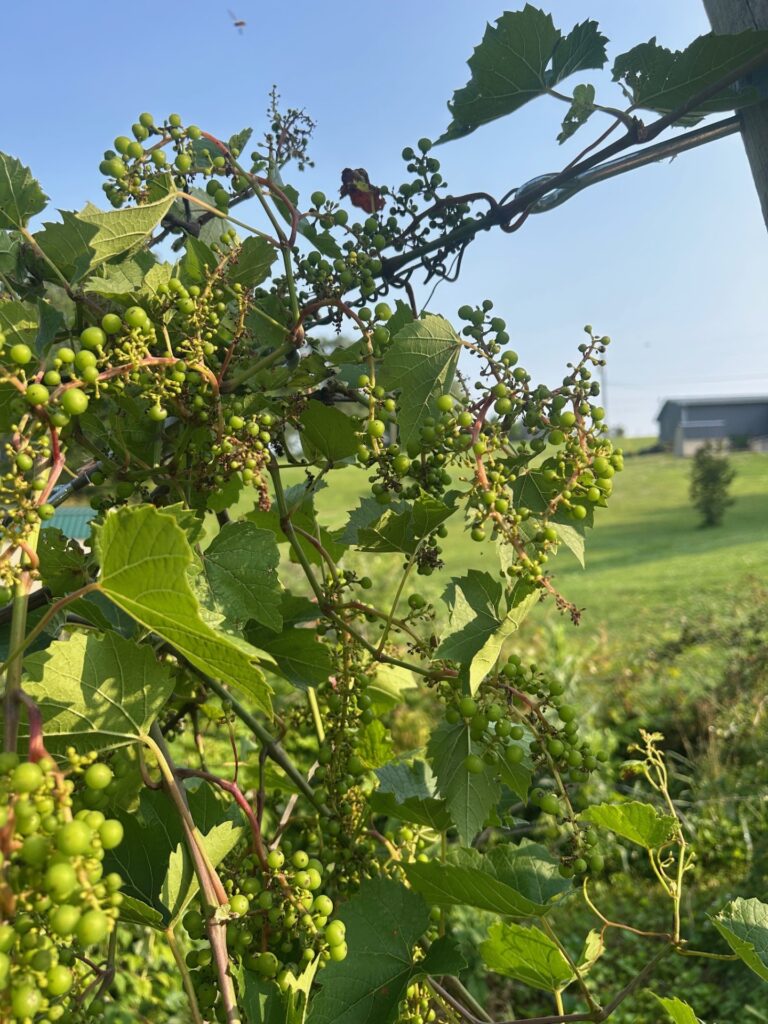
Grapes are typically ready to harvest in late summer to early fall. Harvest time depends on the grape variety and local climate.
Wine Grapes: For wine production, grapes are harvested when they reach the desired sugar level (measured in Brix), typically around 18–24 Brix.
Table Grapes: Table grapes are ready when they are fully colored and taste sweet. Taste a few berries to ensure they are sweet and juicy before harvesting.
How to Harvest:
Grapes should be harvested when fully ripe, as they won’t continue to ripen after being picked. Use sharp garden shears or scissors to cut the clusters from the vine. Be careful not to damage the vines or the fruit.
Post-Harvest Care:
Store fresh grapes in the refrigerator. Grapes can last for about 1–2 weeks when kept cool and dry.
To preserve excess grapes, you can freeze them by laying them in a single layer on a baking sheet before transferring them to freezer bags. You can also make jams, jellies, or juice from your harvest.
8. Winter Care for Grapevines
Grapevines are dormant in winter, but they still require protection in colder climates.
Mulch around the base of the vines in late fall to insulate the roots and prevent frost damage.
Prune in late winter or early spring while the vines are still dormant to reduce frost damage on fresh cuts.
In regions with very cold winters, you may need to cover the vines with a protective tarp or bury them under soil or mulch to prevent freezing.
9. Additional Tips for Success
Patience: Grapevines can take 3 years to produce a small harvest and up to 5 years for full production. Be patient, as it may take a while for your vines to mature and produce fruit.
Training Systems: For optimal grape production, experiment with different training systems like the single-wire trellis, double-wire trellis, or high cordon system.
Companion Planting: Grapevines grow well alongside clover, which can act as a living mulch, as well as garlic and onions, which can deter pests.
These guidelines and paying attention to the specific needs of your grapevines, you’ll be on your way to growing healthy, productive vines and enjoying your own grapes for years to come. I currently have 2 Concord grapes, 2 Niagara, 2 Thompson, and 2 Neptune. I get tons of grapes and they are pretty much carefree in the spring and summer. I do prune in the winter. Really the only care in the summer other than picking is keep the Japanese beetles from eating them. Grapes seem to be one of their favorite foods.