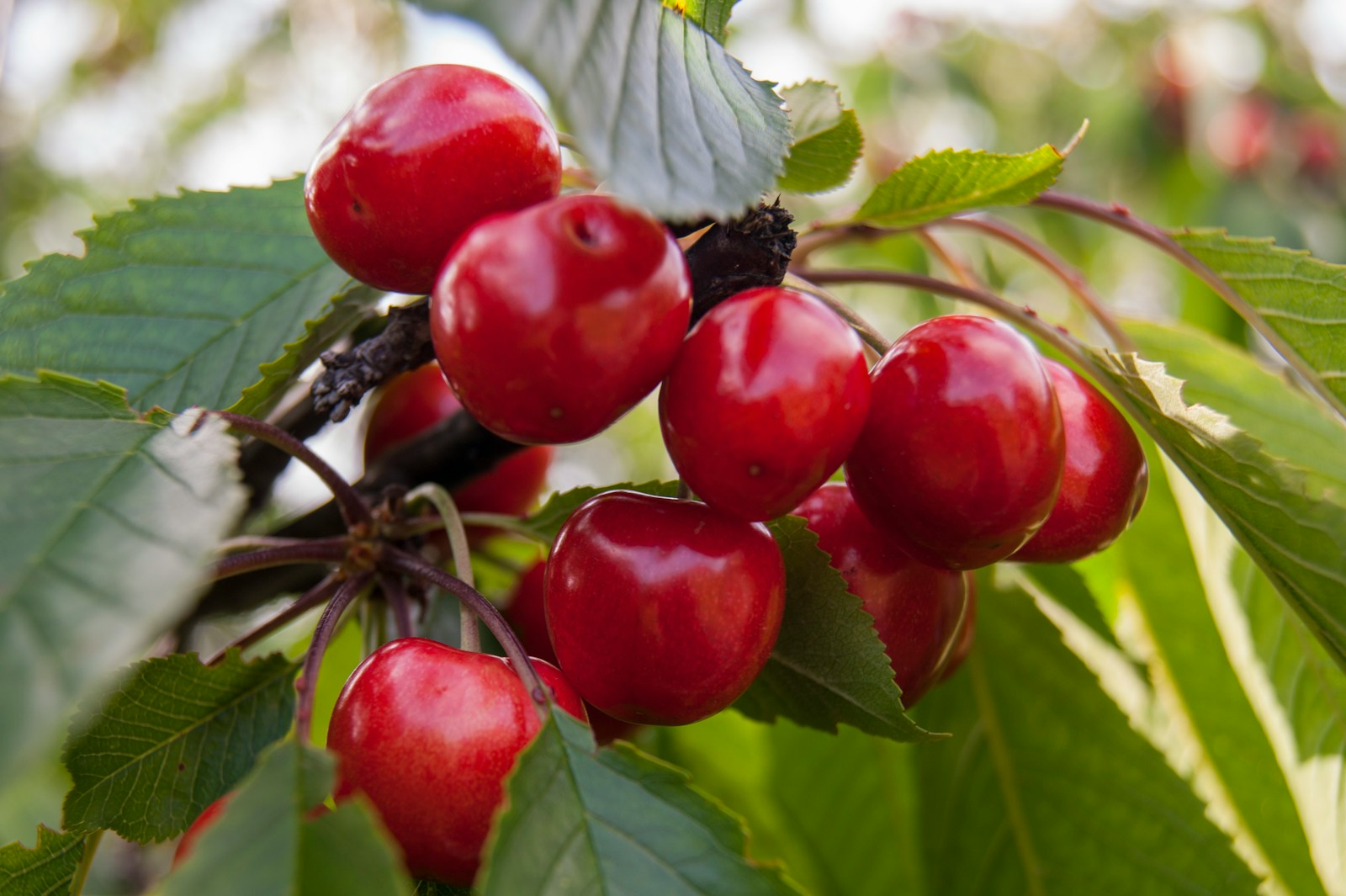
There’s nothing better than picking a ripe cherry straight off the branch and tasting that natural sweetness you just can’t get from store-bought fruit. Cherry trees are also beautiful, especially in the spring when they’re covered in soft blossoms that brighten up your whole space. They don’t just provide fruit — they add shade, color, and a peaceful feeling to your home. If cherries are your favorite fruit, like mine they are a must have for any fruit grower. I have more cherry trees than any other fruit trees, probably around 20.
Different types of cherries
There are really two different types of cherries, sweet and sour. Although a sour cherry (or pie cherry) is tart I would not consider it sour by any means. I like alot of folks love eating sour cherries right off the tree just like a sweet cherry. However, the main difference between the cherry is that sweet cherries are to be eating fresh while sour cherries shine when cooked.
Two main types of cherries:
1. Sweet Cherries
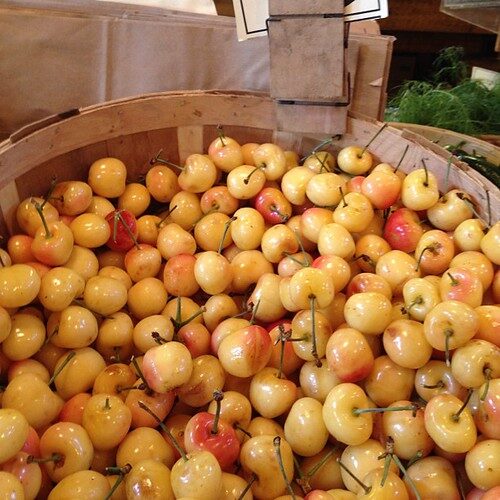
These are the ones you usually eat fresh. They’re juicy, firm, and naturally sweet. Popular varieties include Bing and Rainier. Sweet cherries are great for snacking right off the tree.
2. Sour (Tart) Cherries
These have a bright, tangy flavor. They’re most often used for pies, jams, juice, and baking. Montmorency is one of the most well-known sour types.
Best cherry varieties
Zone 7 is a great climate for growing many varieties of cherry trees, as it has a moderate winter chill that most cherries need for dormancy, along with a long enough growing season. When choosing the best cherry trees for USDA Zone 7, it’s important to consider:
Although like most plants and fruits a lot depends on your zone but here are some of my favorite cherry trees
- Chill hour requirements (Zone 7 typically gets 700–1,000 chill hours)
- Disease resistance
- Harvest time (early, mid, or late season)
- Pollination since sweet and sour cherries do not pollinate each other
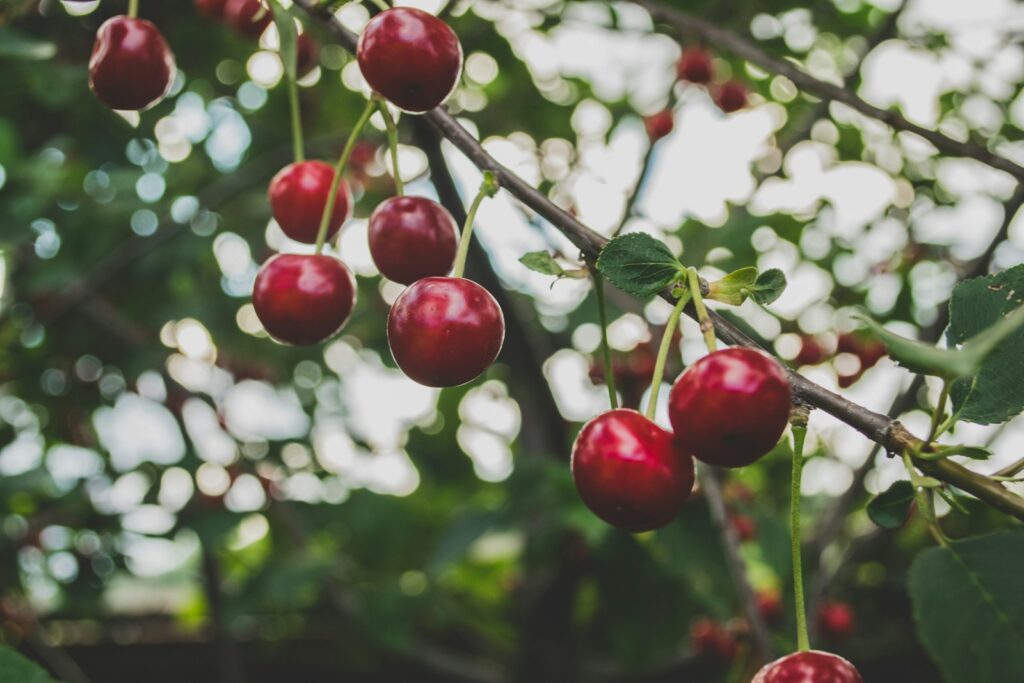
Best sour cherries trees to grow
| Variety | Size (Approx.) | Why It’s Great for Zone 7 |
|---|---|---|
| Montmorency | 12–18 ft | Classic tart cherry, heavy producer, very reliable and self-fertile. |
| North Star | 7–10 ft (dwarf) | Compact size for small yards, hardy, and easy to maintain. |
| Balaton | 12–15 ft | Dark red fruit with rich tart flavor; slightly sweeter than many sour types. |
| Juliet | 6–8 ft | Bush-style tree, productive and great for smaller spaces. |
| Surefire | 12–15 ft | Early harvest, consistent crops, and well-suited to Zone 7 climates. |
Best sweet cherry varieties
| Variety | Size (Mature) | Why It’s Great in Zone 7 |
|---|---|---|
| Bing | ~15–25 ft | The classic sweet cherry with large deep-red fruit |
| Lapins | ~10–18 ft | Sweet dark red cherries and a and a added bonus is self-fertile |
| Stella | ~10–20 ft | Sweet and another self-fertile |
| Rainier | ~12–20 ft | Yellow-and-pink cherries with outstanding sweet flavor, easliy most people favorite sweet cherry |
| Sweetheart | ~12–16 ft | A late-season sweet cherries, smaller tree |
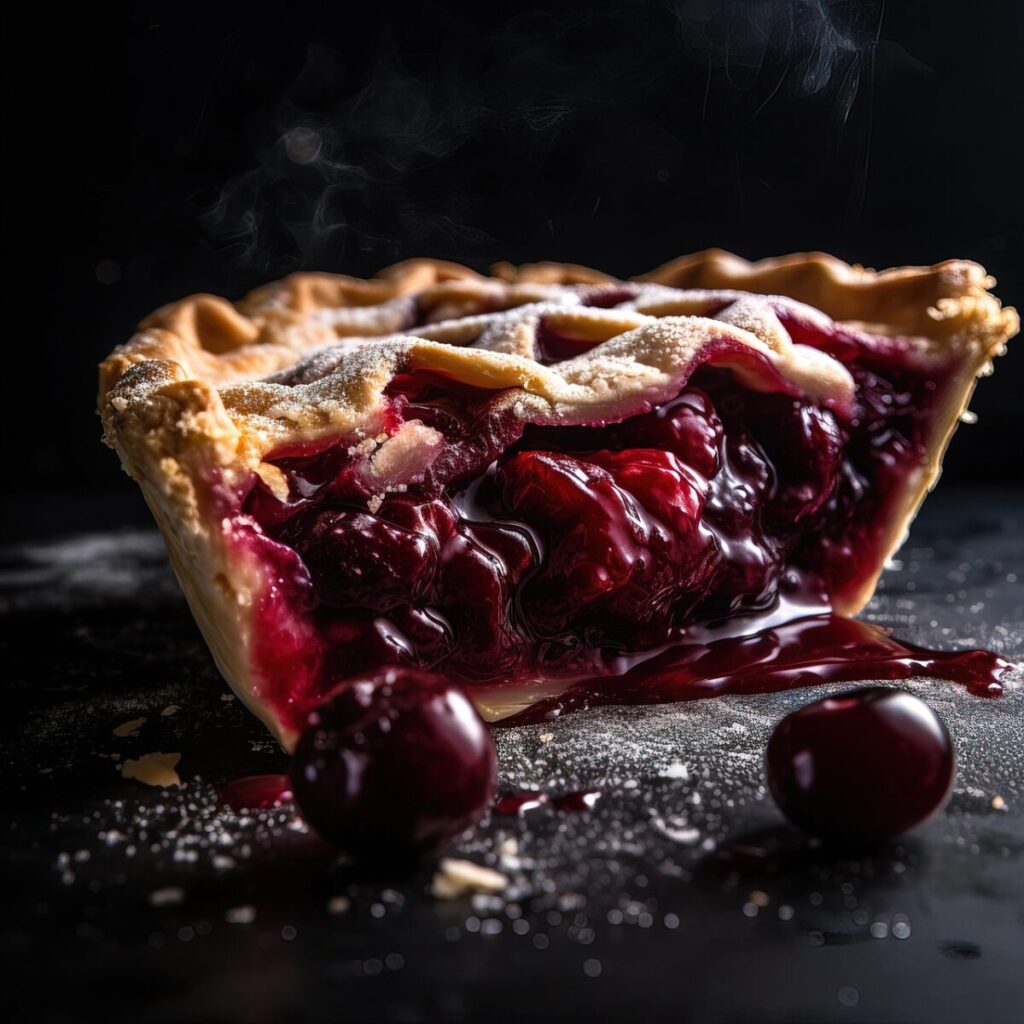
Best cherries for cooking
Although sour cherries do normally out shine sweet cherries for baking there are a few examples different.
| Variety | Type | Best Cooking Uses |
|---|---|---|
| Montmorency | Sour | The classic baking cherry — perfect for pies, crisps, tarts, and canning. Bright, tangy flavor holds up well in heat. |
| Balaton | Sour | Richer, darker flavor than many sours — great for preserves, sauces, and baking. |
| English Morello | Sour | Traditional cooking cherry; excellent in compotes, jams, and cooked desserts. |
| Bing | Sweet | Good for cooked desserts when you want sweeter fruit — works in pies, crisps, and cobblers. |
| Rainier | Sweet | Sweeter and juicier — tasty in fruit sauces, baking, or fruit salads served warm. |
Pollination
| Variety | Self-Fertile? | Good Pollination Partners |
|---|---|---|
| Bing | ❌ No | Stella, Lapins, Rainier |
| Rainier | ❌ No | Bing, Stella, Lapins |
| Lapins | ✅ Yes | Self-fertile (can also pollinate Bing & Rainier) |
| Stella | ✅ Yes | Self-fertile (also pollinates Bing & Rainier) |
| Sweetheart | ✅ Yes | Self-fertile (benefits from Stella or Lapins nearby) |
Quick Tips
- Plant trees within about 50 feet of each other for best pollination.
- Make sure varieties bloom at the same time (the ones above generally overlap well).
- Even self-fertile trees often produce heavier crops with a partner nearby.
The common sour cherry trees are naturally self-pollinating, which means a single tree can produce fruit on its own. Popular varieties like Montmorency, North Star, Balaton, and Juliet are all self-fertile.
That said:
- A second sour cherry nearby can sometimes increase yields.
- Sour cherries generally cannot pollinate sweet cherries (this is a common mistake).
Bloom‑time chart
| Cherry Variety | Typical Bloom Time |
|---|---|
| Black Tartarian (sweet) | Early spring (early bloom) |
| Lapins (sweet) | Early spring (self‑fertile) |
| Skeena (sweet) | Early spring |
| BlackPearl (sweet) | Early spring |
| Early Richmond (sour) | Early spring (self‑fertile) |
| Emperor Francis (sweet) | Early to mid‑spring |
| Hedelfingen (sweet) | Early to mid‑spring |
| Balaton (sour) | Mid‑spring |
| Bing (sweet) | Mid‑spring |
| WhiteGold (sweet) | Late spring |
Harvest time
| Cherry Variety | Type | Approx. Harvest Time |
|---|---|---|
| Rainier | Sweet | Late May – Mid June |
| Chelan | Sweet | Late May – Early June |
| Bing | Sweet | Mid June – Early July |
| Van | Sweet | Mid June (mid‑season) |
| Lapins | Sweet | Early July – Mid August |
| Skeena | Sweet | Mid July – Early August |
| Sweetheart | Sweet | Late July – Mid August |
| Montmorency | Sour | Late June |
| Balaton | Sour | Late June – Mid July |
| North Star | Sour | Early – Mid Summer |
Harvest rate chart tree size
| Tree Type | Mature Size | Approx. Annual Harvest per Tree | Notes |
|---|---|---|---|
| Dwarf | 6–10 ft | 30–100 lbs | Smaller footprint, easier to prune and harvest; ideal for patios and small yards; reaches full production faster (often 3–4 years). |
| Semi‑Dwarf | 12–18 ft | 100–250 lbs | Good balance of size and yield; easier to manage than standards but produces a substantial harvest; full production in ~4–6 years. |
| Standard (Full-size) | 18–25+ ft | 250–500+ lbs | Maximum yield per tree; requires more space, heavier pruning, and longer time to reach full production (~6–8 years). |
My personal favorite
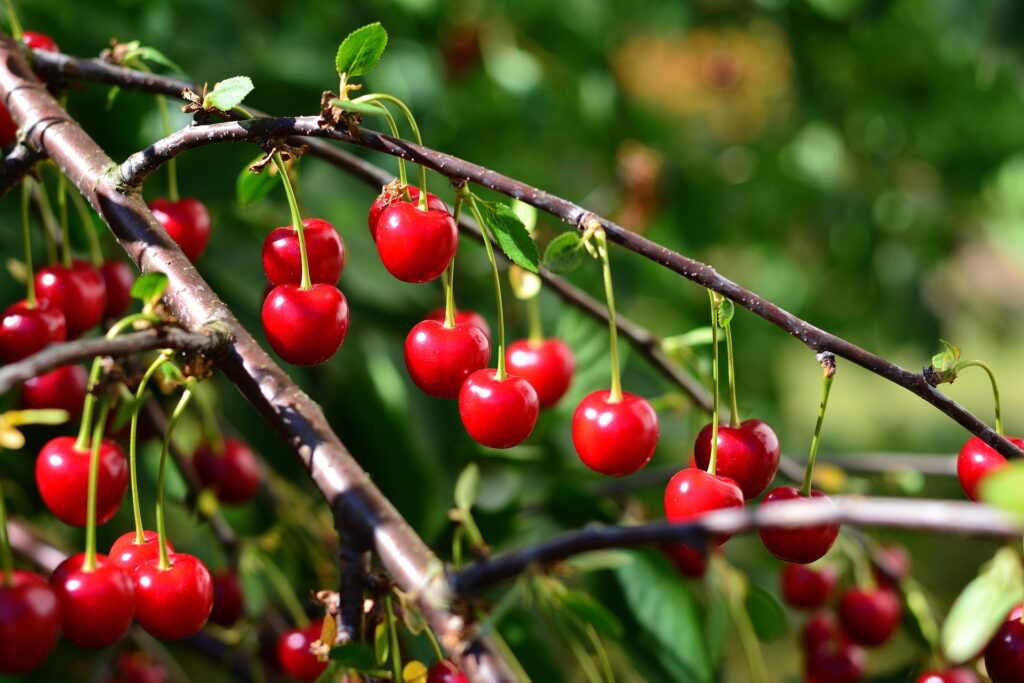
Montmorency cherries are often considered the best for a reason they’re the classic tart cherry that works perfectly for pies, jams, and baking, with a bright, tangy flavor that really pops. They are great for eating fresh off the tree too even though they are a tart cherry. Montmorency is by far the most common cherry grown by home growers. They are also widely available, I would almost guarantee if you remember a cherry tree at your parents or grand parents when you were a kid this was the type of cherry tree. They are very reliable, hardy, and easy to grow, making them ideal for a home orchard, especially in Zone 7. If you like sweet cherries too, Stella and Rainier are worth mentioning: Stella is a dark sweet juicy cherry that are great fresh or for desserts, while Rainier offers those beautiful yellow-and-pink cherries with an incredibly sweet flavor that’s hard to beat straight off the tree.
No responses yet